• Meenakshi Manor ,1st Floor, 58/31,3rd Lane North Beach Road,Chennai – 600001.
  • Mon - Sat: 8am - 5pm
  • +91 9176181333

Blog

Air and Sea Freight Forwarding in India: Complete Guide for Importers & Exporters (2026)

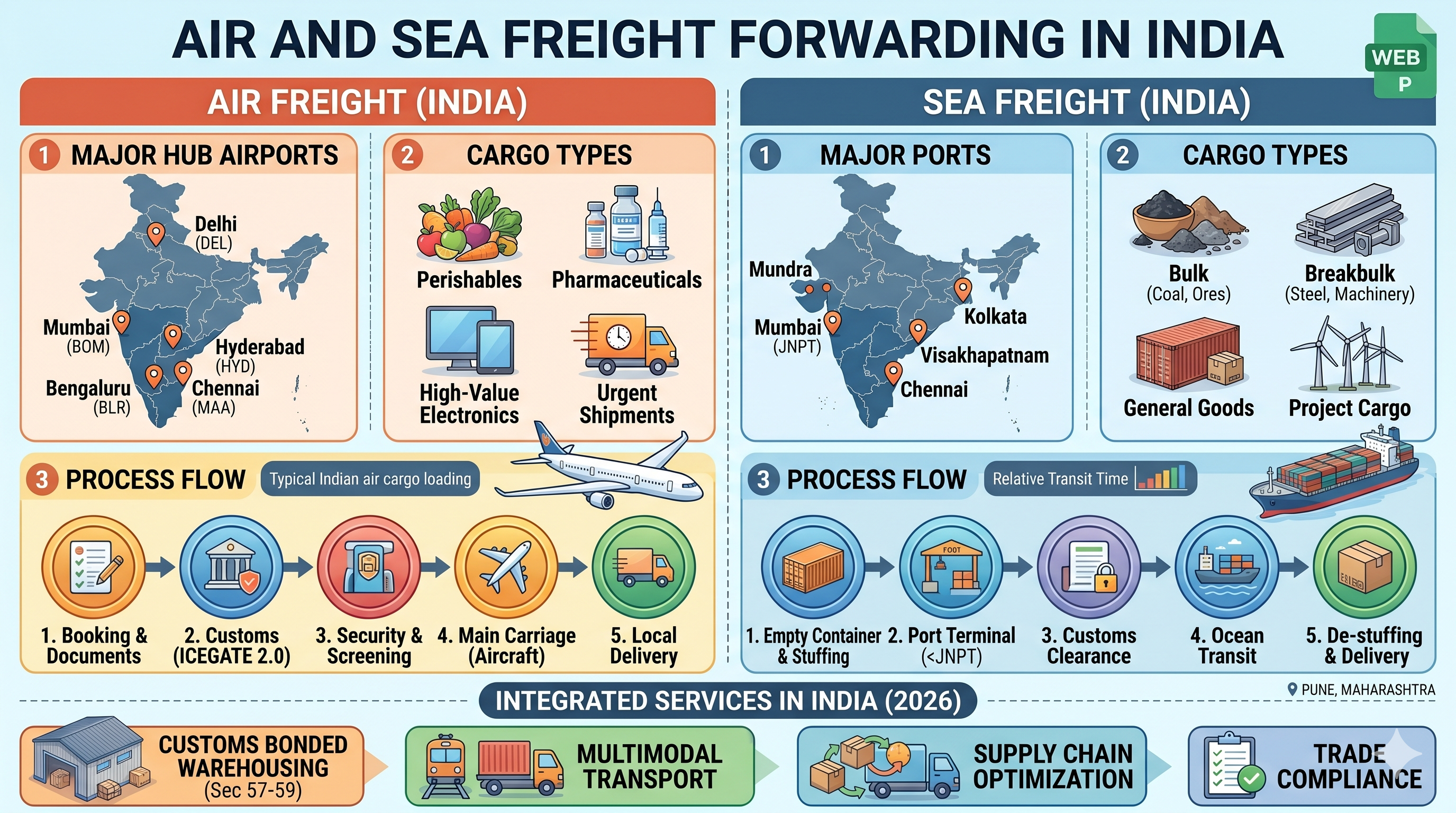
Freight forwarding in India means organising international cargo movement via air or sea on behalf of importers and exporters. A freight forwarder books cargo space, manages documentation, and coordinates customs clearance. Air freight is fast (1–5 days) but expensive. Sea freight is slower (10–35 days) but far more cost-effective for volume. Choosing the right mode — and the right forwarder — determines your total landed cost and supply chain reliability.

Getting cargo across borders isn't just about booking a ship or a plane. It's about understanding which mode fits your timeline and budget, choosing the right container type, structuring the trade terms correctly, and making sure customs at both ends doesn't hold things up.

That's what a freight forwarder does. They manage the logistics chain between your factory and your buyer's door — or between your supplier's warehouse and yours — so you can focus on running your business.

This guide explains how freight forwarding works in India, what air and sea freight each offer, how FCL and LCL differ, why Incoterms matter, and what to look for when choosing a freight forwarding partner.

What is freight forwarding in India? Freight forwarding is the service of organising international cargo shipments for importers and exporters. A licensed freight forwarder books cargo space with airlines or shipping lines, prepares and files shipping documents, manages customs clearance, and coordinates final delivery. They act as the single point of contact between your business and the carriers, ports, and customs authorities involved in your shipment.

Freight Forwarding India — Key Facts & Benchmarks 2026

Metric Data Point Source
India merchandise exports 2024–25 USD 437 billion Ministry of Commerce 2025
Air freight transit time (India to key markets) 1–5 days Industry benchmark
Sea freight — China to Chennai (FCL direct) 12–18 days Carrier schedules
Sea vs air freight cost differential Sea is 4–6x cheaper per kg Industry benchmark
20-foot container capacity ~25 tonnes / 25 CBM ISO Standard
40-foot container capacity ~28 tonnes / 60 CBM ISO Standard
Chennai Port annual throughput 2 million+ TEUs/year Chennai Port Authority
Arrow Shipping freight experience 30+ years since 1994 Arrow Shipping
Arrow Shipping AEO status Certified by Indian Customs CBIC

What Does a Freight Forwarder Actually Do?

A freight forwarder is not a carrier. They don't own ships or planes. What they own is expertise, relationships, and a network — and they use all three to move your cargo efficiently and compliantly across international borders.

Here's what a full-service freight forwarder manages for you:

  • Carrier booking — securing space on the right vessel or aircraft at the right rate
  • Document preparation — Bill of Lading, Air Waybill, Shipping Bill, commercial invoice review
  • Customs coordination — working with CHAs to file clearance documents at origin and destination
  • Cargo tracking — monitoring shipment status and flagging issues proactively
  • Insurance advisory — recommending appropriate marine or air cargo insurance
  • Last-mile delivery coordination — arranging port-to-warehouse or port-to-factory transport

At Arrow Shipping, we are both a licensed freight forwarder and a licensed Customs House Agent. This means customs clearance and freight are managed by the same team — no gaps, no hand-off delays, no coordination gaps between separate providers.

Air Freight vs Sea Freight — Which Is Right for Your Shipment?

The choice between air and sea freight comes down to four variables: time, cost, volume, and cargo type. Neither is universally better — the right answer depends on your specific shipment.

Factor Air Freight Sea Freight
Transit time 1–5 days internationally 10–35 days depending on route
Cost per kg High — 4–6x more than sea Low — best for volume
Best for Urgent, high-value, perishable Bulk, heavy, price-sensitive
Weight limit per shipment No formal limit but cost rises fast Up to 28 tonnes (40-ft FCL)
Frequency Daily flights on major routes Weekly or bi-weekly vessel calls
Size restrictions Strict — aircraft hold dimensions Flexible — OOG options available
Carbon footprint Higher per tonne-km Lower per tonne-km

When should you choose air freight over sea? Air freight makes sense when your cargo is time-critical (product launches, spare parts, emergency restocking), when the goods are high-value relative to their weight (electronics, pharmaceuticals, precious materials), or when the cost of delay exceeds the premium cost of air. For routine bulk imports, sea freight almost always wins on total landed cost.

FCL vs LCL — Full Container vs Shared Container

For sea freight, the choice between FCL and LCL is one of the most commercially important decisions in your freight plan.

Full Container Load (FCL)

You book an entire container — either a 20-foot (20 TEU) or 40-foot (40 TEU) — for your cargo alone. The container goes from your supplier's factory to your destination without being opened or mixed with other cargo. FCL offers better transit times, lower handling risk, and lower cost per unit for large volumes. If your cargo fills more than 15 CBM, FCL usually beats LCL on cost.

Less than Container Load (LCL)

Your cargo shares container space with other shippers' goods. You pay only for the cubic metres or tonnage your cargo occupies. LCL is cost-effective for smaller shipments — typically under 10–12 CBM. The tradeoff is slightly longer transit time (cargo is consolidated at origin and deconsolidated at destination) and higher per-unit handling risk.

Incoterms — Who Pays for What?

Incoterms (International Commercial Terms) define exactly where seller responsibility ends and buyer responsibility begins. Getting this wrong creates unexpected costs and uncovered risk. Here are the most common Incoterms used in India trade:

Incoterm What Seller Covers What Buyer Covers
EXW (Ex Works) Goods ready at factory Everything from factory gate
FOB (Free on Board) To port + load on vessel Freight + insurance + destination
CIF (Cost, Insurance & Freight) Freight + insurance to destination port Import duties + local delivery
DDP (Delivered Duty Paid) Everything including import duty Nothing — seller handles all
DAP (Delivered at Place) Delivery to named destination Import duties + unloading

Most Indian importers use FOB or CIF terms. Which is better? FOB gives you control over freight — you choose your forwarder and negotiate your own rates. CIF transfers freight control to the seller. FOB is generally preferred by experienced importers because it gives visibility and control over total freight cost. Always consult your freight forwarder on which Incoterm gives you the best cost position for your specific trade lane.

The Freight Forwarding Process — Step by Step

Here's how a typical sea freight import through Arrow Shipping moves from supplier booking to Chennai delivery:

  1. Freight quotation — Supplier provides cargo details; we compare carrier rates and recommend the best option
  2. Container booking — We book FCL or LCL space with the shipping line on your behalf
  3. Document coordination — We collect Bill of Lading, commercial invoice, packing list, and certificate of origin from your supplier
  4. Customs filing — Our CHA team files the Bill of Entry on ICEGATE before the vessel arrives
  5. Duty payment and clearance — Duties paid electronically; clearance obtained in 1–5 days depending on channel
  6. Port pickup and delivery — Container released from port; transported to your factory or our bonded warehouse

Special Cargo — Project and OOG Shipments

Not everything fits in a standard container. Machinery, industrial equipment, structural steel, and large infrastructure components often require out-of-gauge (OOG) or project cargo handling — flat-rack containers, open-top containers, heavy-lift vessels, or multi-modal logistics plans.

Arrow Shipping has handled project cargo for clients across manufacturing, infrastructure, and energy sectors. We coordinate specialist carriers, port authorities, and inland transport to move heavy and oversized shipments without disruption.

See our Project Cargo services page for details.

How to Choose the Right Freight Forwarder in India

The freight market has many providers. The difference between them shows in how they handle problems — a missed vessel call, a customs query, a document discrepancy at 11 PM before sailing day. Here's what to evaluate:

  • Licensing and compliance — Freight forwarder should be a licensed CHA or work closely with one. AEO certification is a strong indicator of compliance standards.
  • Trade lane expertise — Experience on your specific origin-destination route matters. Chennai-China, Chennai-Europe, and Chennai-USA each have different carrier options, transit times, and port procedures.
  • In-house customs capability — Forwarders who also handle customs clearance eliminate hand-off risk. When one team manages freight and clearance, nothing falls between the cracks.
  • Transparency on pricing — Freight quotes should itemise every charge: ocean freight, origin charges, destination charges, CFS handling, customs fees. Hidden charges are a red flag.
  • Track record and references — Ask for client references in your industry. Experienced forwarders have documented case histories and established relationships with port authorities.

Arrow Shipping checks every one of these boxes — 30+ years of freight experience, AEO certification, in-house CHA team, and a client list that includes global manufacturers, pharma companies, and engineering firms importing through Chennai.

10-Point Freight Forwarding Readiness Checklist

  • ? Incoterm agreed with supplier or buyer — and both parties understand its implications
  • ? Cargo dimensions, weight, and CBM confirmed before freight quote
  • ? FCL vs LCL decision made based on volume threshold (typically 12–15 CBM)
  • ? Air vs sea mode selected based on timeline and cost analysis
  • ? Freight forwarder appointed with CHA capability included
  • ? Commercial invoice and packing list prepared accurately before container stuffing
  • ? Bill of Lading or Air Waybill received and checked for accuracy before vessel/flight
  • ? Customs duty estimate obtained before cargo arrives at Indian port
  • ? Marine cargo insurance arranged for the shipment
  • ? Delivery plan from port to factory or warehouse confirmed in advance

Frequently Asked Questions — Freight Forwarding India

What is freight forwarding in India?

Freight forwarding is the service of organising international cargo shipments for Indian importers and exporters. A freight forwarder books cargo space with airlines or shipping lines, prepares shipping documents, coordinates customs clearance, and manages end-to-end cargo delivery. They are the logistics intermediary between your business and the carriers, ports, and customs authorities involved in your shipment.

What is the difference between air freight and sea freight?

Air freight is fast (1–5 days) but expensive — 4–6 times more per kg than sea freight for equivalent volume. Sea freight is slower (10–35 days) but significantly cheaper for bulk cargo. Air freight suits urgent, high-value, or lightweight shipments. Sea freight is the standard for most industrial imports and bulk commodity trade.

What is FCL vs LCL in sea freight?

FCL is a Full Container Load — you book the entire container. LCL is Less than Container Load — your cargo shares space with other shippers. FCL is more cost-effective for volumes above 12–15 CBM and offers better transit time. LCL suits smaller shipments where paying for an entire container is not economical.

How long does sea freight from China to Chennai take?

FCL direct services from major Chinese ports (Shanghai, Guangzhou, Ningbo) to Chennai take 12–18 days. LCL and transshipment routes via Singapore or Colombo add 7–14 days to the total transit time. Exact schedules depend on carrier, vessel, and origin port selection.

What are Incoterms and why do they matter?

Incoterms are standardised trade terms that define who — buyer or seller — bears the cost and risk of shipping at each stage of the journey. Common terms include FOB, CIF, EXW, DDP, and DAP. Choosing the wrong Incoterm can leave you responsible for freight costs or risks you didn't anticipate, so it's essential to agree on and understand terms before placing the order.

Why choose Arrow Shipping as a freight forwarder?

Arrow Shipping combines 30+ years of freight forwarding experience with AEO certification and in-house CHA capability at Chennai and all major Indian ports. We manage air freight, sea freight (FCL and LCL), project cargo, customs clearance, and bonded warehousing under one roof — giving clients a single point of contact and full visibility across their entire import or export chain.

Related Resources

Custom Bonded Warehouse in India: Complete Guide for Importers (2026)

A custom bonded warehouse lets you import goods into India and defer customs duty payment until you actually need the stock. Goods can be stored for up to 3 years, withdrawn in partial quantities, or re-exported without paying any Indian duty. For importers who buy in bulk, manage seasonal demand, or use India as a distribution hub, bonded warehousing delivers significant cash flow and logistics advantages.

Paying full customs duty the moment a container arrives — before you even need the goods — locks up working capital unnecessarily. For businesses that import in bulk, manage seasonal production cycles, or serve multiple markets from a single stock point, this is a real cost problem.

A custom bonded warehouse solves it. Instead of paying duty at the port, you move your goods into licensed bonded storage and pay duty only when you withdraw stock for actual use. The rest stays in the warehouse — duty-free, secure, and ready when you need it.

This guide covers everything about bonded warehousing in India: how it's licensed, how the import process works, what you can and can't store, and the specific cash flow and logistics advantages it offers.

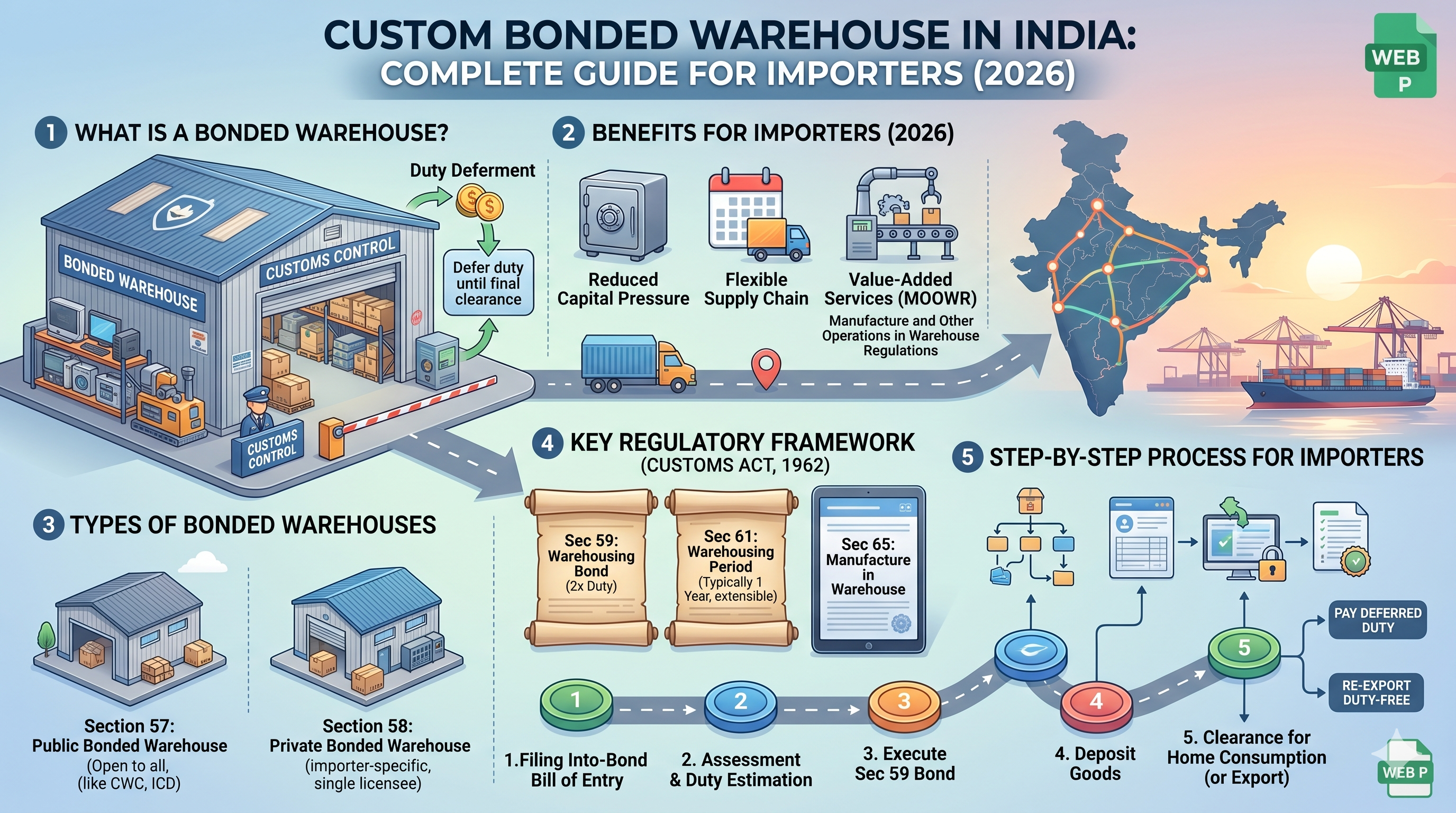
What is a custom bonded warehouse in India? A custom bonded warehouse is a government-licensed storage facility where imported goods are held under customs bond without immediate duty payment. Duty is deferred until goods are withdrawn for home consumption. Licensing is governed by Sections 57–58 of the Customs Act 1962, and the facility operates under CBIC supervision. Goods can be stored for up to 3 years and can be re-exported without incurring Indian customs duty.

Bonded Warehousing in India — Key Facts & Figures 2026

Parameter Detail Reference
Maximum storage period 3 years from date of import Customs Act 1962
Duty payment timing At Ex-Bond clearance only CBIC
Partial withdrawal allowed Yes — pay duty on quantity withdrawn Customs Act 1962
Re-export without duty Allowed from bonded warehouse CBIC
Licensing authority CBIC — Section 57 (public) / 58 (private) Customs Act 1962
India warehousing market size 2025 USD 35+ billion DPIIT Industry Report 2025
Chennai Port container throughput 2 million+ TEUs/year Chennai Port Authority
Duty rate applicable Rate on date of Ex-Bond clearance Customs Act 1962
Arrow Shipping warehouse location Near Chennai seaport & airport Arrow Shipping
Arrow Shipping experience 30+ years since 1994 Arrow Shipping

What Is a Custom Bonded Warehouse?

A custom bonded warehouse is a storage facility licensed by CBIC where imported goods are held under a customs bond. The bond is a legal guarantee that duty will be paid when goods leave the warehouse for home consumption. Until that point, the goods stay in storage — under customs control but without duty liability on the importer.

Two types of bonded warehouses exist under Indian law. Section 57 warehouses are public facilities run by government agencies. Section 58 warehouses are privately owned and licensed — these are the type most importers use when working with a logistics provider like Arrow Shipping.

The warehouse itself operates under strict CBIC oversight. Every movement of goods — in or out — is documented and reported to customs. The importer can withdraw stock in any quantity at any time, paying duty only on what is taken out.

How Bonded Warehousing Works — The Full Import Process

Using a bonded warehouse doesn't complicate your import. It adds one step at the front and changes when duty is paid. Here's how the full process works:

Step 1: File an Into-Bond Bill of Entry

When your cargo arrives at the Indian port, your CHA files an Into-Bond Bill of Entry on ICEGATE instead of a standard import Bill of Entry. This declares the goods for bonded storage rather than home consumption. Customs assesses the applicable duty but does not collect it at this stage. The assessment is recorded for future reference.

Step 2: Transfer Cargo to the Bonded Warehouse

After customs approves the Into-Bond filing, the cargo moves from the port to the licensed bonded warehouse — under customs supervision. The transfer is documented, and the goods are now officially in bonded storage. Port-related charges stop accruing. Demurrage risk disappears.

Step 3: Store and Manage Inventory

Your goods sit in the bonded facility, secure and accounted for. You can withdraw as much or as little as you need — 10 units today, another 50 next month — paying duty only on what you take. The rest continues to wait in bonded storage, duty-free.

Step 4: File an Ex-Bond Bill of Entry When You Need Stock

When you're ready to use the goods, your CHA files an Ex-Bond Bill of Entry. Duty is calculated at the rate applicable on the withdrawal date — not the original import date. This matters if duty rates change during the storage period. Payment clears the goods for home consumption.

Step 5: Delivery to Your Factory or Distribution Centre

After customs releases the goods, they're transported from the bonded warehouse to your facility. Arrow Shipping handles this end-to-end — from port pickup to bonded storage to final delivery, with all customs documentation managed in-house.

Quick answer — Can you withdraw partial stock from a bonded warehouse? Yes. You pay duty only on the quantity you withdraw each time. The rest stays in bonded storage until you need it. This makes bonded warehousing ideal for businesses with variable production or sales schedules.

Key Benefits of Custom Bonded Warehousing

1. Duty Deferment — Better Cash Flow

This is the headline benefit. You don't pay duty until you use the goods. If you import a 3-month supply at once, you only pay duty on what you clear each month — not all of it upfront. For high-duty goods, this can free up substantial working capital.

2. Re-Export Without Duty

If your plans change — a foreign buyer comes through, or you want to redirect stock to another market — you can re-export directly from the bonded warehouse without paying Indian customs duty at all. This makes bonded storage valuable for traders who import speculatively or who serve multiple markets.

3. Reduced Port Congestion Risk

Moving goods out of the port quickly and into bonded storage eliminates demurrage exposure. You're not racing the clock to clear customs before port charges escalate. The cargo is safe in the warehouse while you manage clearance at your own pace.

4. Flexible Inventory Management

Withdraw what you need, when you need it. Bonded warehousing lets you import in bulk — capturing better freight rates and supplier pricing — while releasing stock in smaller, demand-driven quantities.

5. Consolidation from Multiple Shipments

You can bond goods from multiple different import shipments in the same facility, building a consolidated inventory base. This is especially useful for manufacturers who import components from several suppliers globally.

Feature Bonded Warehouse Regular Warehouse
Duty payment timing On withdrawal only At import clearance
Re-export without duty Yes No (duty already paid)
CBIC supervision Yes — licensed facility No
Partial withdrawal Yes — duty on quantity No restriction
Max storage period 3 years Unlimited
Cash flow benefit Significant — duty deferred None

Which industries benefit most from bonded warehousing? Manufacturers importing components or raw materials, electronics importers, automotive parts suppliers, pharma companies importing APIs, and traders who re-export goods to third-country buyers all see strong cash flow and logistics benefits from bonded storage.

What Can Be Stored in a Bonded Warehouse?

Most commercial import goods are eligible for bonded storage. This includes raw materials, components, machinery, electronics, textiles, industrial equipment, and consumer goods. The key requirement is that the goods must be declared under a valid Bill of Entry and must comply with all applicable import regulations.

Certain categories require additional consideration. Hazardous goods need special approvals and may require dedicated bonded facilities with appropriate safety infrastructure. Perishable goods with short shelf lives are generally not suited to extended bonded storage. Restricted imports — such as certain chemicals, dual-use goods, or controlled substances — require valid licences before storage and clearance.

Important — Duty Rate Risk: Duty is calculated at the rate applicable on the Ex-Bond date, not the original import date. If duty rates increase during your storage period, you pay the higher rate when you withdraw stock. Your CHA can advise on duty rate trends and optimal withdrawal timing for your commodity.

Arrow Shipping's Bonded Warehouse — Chennai

Arrow Shipping's custom bonded warehouse is located near Chennai's seaport and airport — putting your stock minutes from the port, not hours. Our facility is CBIC-licensed under Section 58 of the Customs Act 1962 and handles both FCL and LCL cargo.

As an AEO-certified company, we combine bonded storage with integrated customs clearance, freight handling, and cargo transportation under one roof. You don't need to coordinate between three separate service providers — we manage the full chain from port to warehouse to factory.

10-Point Bonded Warehouse Readiness Checklist

  • ? Confirmed goods are eligible for bonded storage (not perishable or prohibited)
  • ? Import licence or permit obtained for regulated commodities
  • ? CHA appointed with experience in Into-Bond and Ex-Bond filing
  • ? CBIC-licensed bonded facility identified near your port of entry
  • ? Into-Bond Bill of Entry filed before cargo is released from port
  • ? Storage duration planned to stay within 3-year limit
  • ? Inventory management system in place for partial withdrawal tracking
  • ? Duty rate monitoring in place for commodity during storage period
  • ? Re-export documentation prepared if redirection to foreign buyer is possible
  • ? Transportation plan from bonded warehouse to factory confirmed

Frequently Asked Questions — Custom Bonded Warehouse India

What is a custom bonded warehouse in India?

A custom bonded warehouse is a CBIC-licensed facility where imported goods are stored under customs bond without immediate duty payment. Duty is deferred until goods are withdrawn for home consumption. Goods can be stored for up to 3 years and can be re-exported duty-free. The facility operates under Sections 57–58 of the Customs Act 1962.

How long can goods be stored in a bonded warehouse in India?

Goods can be stored in an Indian bonded warehouse for up to 3 years from the date of import. After 3 years, the goods must be cleared for home consumption by paying applicable duties, re-exported, or abandoned to customs. Extensions beyond 3 years require CBIC approval and are not routinely granted.

What is the benefit of using a bonded warehouse?

The primary benefit is duty deferment — you pay customs duty only when you actually withdraw stock for use. This improves cash flow significantly for bulk importers. Other benefits include the ability to re-export without paying Indian duty, partial stock withdrawal, and reduced demurrage exposure by moving cargo off the port quickly into bonded storage.

Can goods be re-exported from a bonded warehouse without paying duty?

Yes. Goods can be re-exported from an Indian bonded warehouse to another country without paying customs duty. This is one of the key advantages for traders who import speculatively or who serve multiple markets. The re-export must be declared and documented through ICEGATE before the goods are moved out of the bonded facility.

What is the difference between a bonded and a regular warehouse?

A bonded warehouse holds goods under customs control, with duty deferred until withdrawal. A regular warehouse stores goods that have already cleared customs and had duty paid. Bonded storage allows re-export without duty; regular storage does not. Bonded warehouses require CBIC licensing and operate under customs supervision.

How does Arrow Shipping manage bonded warehouse operations?

Arrow Shipping manages the complete bonded warehouse cycle — port pickup, Into-Bond filing, secure storage near Chennai port, Ex-Bond clearance, and final delivery. As an AEO-certified logistics company with 30+ years of experience, we combine bonded warehousing with integrated customs clearance and cargo transportation, handling everything under one roof.

Related Resources

Custom Clearance in India: Complete Guide for Importers & Exporters (2026)

Custom clearance in India is the mandatory process of declaring goods to Indian Customs, paying applicable duties, and obtaining release for import or export. It involves filing a Bill of Entry (import) or Shipping Bill (export) on ICEGATE, duty payment, and possible examination. Green channel cargo clears in 1–2 days. A licensed Customs House Agent (CHA) manages the full process on your behalf, reducing delays and ensuring compliance.

Every shipment that crosses India's borders must pass through customs. Whether you're importing raw materials, machinery, or finished goods — or exporting products to global markets — customs clearance is the regulatory gateway that decides how fast and how smoothly your cargo moves.

Get it right, and your goods are released within days. Get it wrong, and you're looking at demurrage charges, compliance penalties, and supply chain disruption. The rules are detailed, the documentation is strict, and the process changes frequently.

This guide breaks down exactly how custom clearance works in India — from filing your first Bill of Entry to collecting your cargo after the Out-of-Charge order. We cover every step, every document, and every common mistake that causes avoidable delays.

What is custom clearance in India? Custom clearance is the official process of submitting an import or export declaration to Indian Customs, paying all applicable duties and taxes, and receiving authorisation to release the cargo. It is governed by the Customs Act 1962 and administered by CBIC through the ICEGATE digital portal. Most standard import clearances take 1–5 working days depending on the risk channel assigned to the shipment.

Key Custom Clearance Statistics — India 2026

Metric Data Point Source
Green Channel clearance time 1–2 working days CBIC
Yellow Channel clearance time 2–5 working days CBIC
Red Channel clearance time 5–10 working days CBIC
Total ports & ICDs in India 212+ CBIC Port Directory
India merchandise exports 2024–25 USD 437 billion Ministry of Commerce 2025
Basic Customs Duty range 0%–150% Customs Tariff Act
IGST on imports 5%–28% GST Council
AEO-certified entities in India 5,500+ (2025) CBIC Annual Report 2025
Demurrage cost at Chennai Port INR 5,000–25,000/container/day Chennai Port Trust
ICEGATE daily Bill of Entry filings 1.5 lakh+ ICEGATE Portal Data
Arrow Shipping experience 30+ years since 1994 Arrow Shipping
Ports covered by Arrow Shipping All major Indian seaports & airports Arrow Shipping

What Is Custom Clearance in India?

Custom clearance is the formal regulatory process that every commercial shipment must complete before it can enter or leave India. When goods arrive at an Indian port or airport, they're held in a customs area until the importer files the required declaration, pays applicable duties, and receives official clearance from the customs authority.

The process is administered by the Central Board of Indirect Taxes and Customs (CBIC) under the Customs Act 1962. All filings go through the ICEGATE portal — India's national customs electronic gateway. ICEGATE handles everything from Bill of Entry filing and duty calculation to risk assessment and cargo release orders.

Custom clearance applies to both imports and exports, though the documents and procedures differ. Imports involve a Bill of Entry; exports require a Shipping Bill. Both require accurate commodity classification using India's ITC-HS code system, which determines the duty rate applicable to your goods.

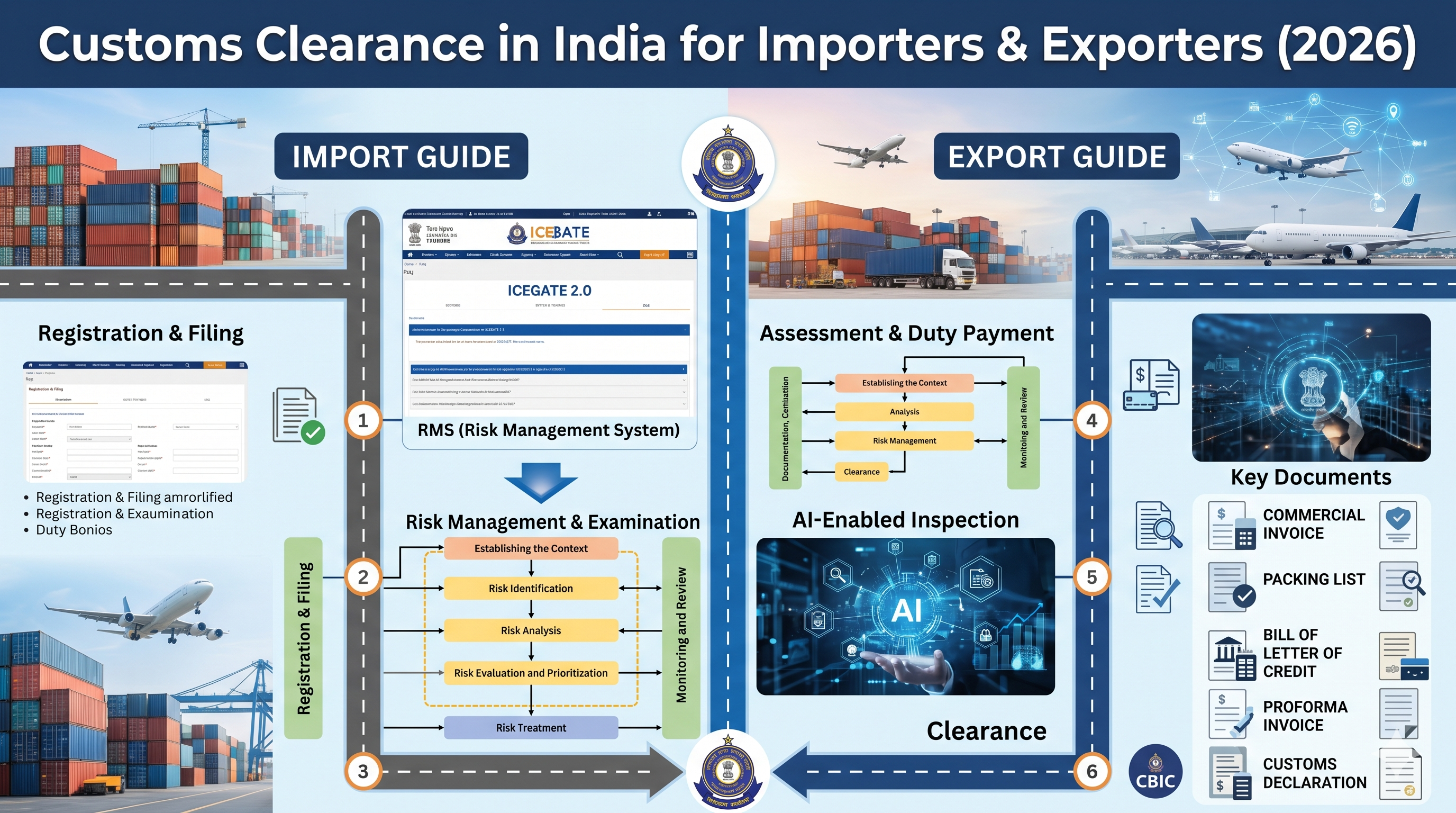
The Custom Clearance Process in India — Step by Step

Whether you import via sea or air, the customs clearance sequence follows a defined path. Understanding each step helps you prepare the right documents, anticipate timelines, and avoid the most common delays.

Step 1: Document Collection

Before any customs filing begins, your CHA needs the full document set. For sea imports, this includes the Bill of Lading, commercial invoice, packing list, and certificate of origin. Air imports use an Air Waybill instead of a Bill of Lading. Commodity-specific licences — such as those required for electronics, chemicals, or medical equipment — must also be ready at this stage.

Step 2: Bill of Entry Filing on ICEGATE

Your licensed CHA files the Bill of Entry electronically on ICEGATE. This document declares the goods, their assessed value, the applicable ITC-HS code, and the duty payable. Accuracy matters here — incorrect HS classification or undervaluation triggers re-assessment, examination, or penalties. A good CHA gets this right the first time.

Step 3: Risk Channel Assessment

ICEGATE's risk management system automatically assigns your shipment to one of three channels after the Bill of Entry is filed. Green channel — fastest clearance, no examination needed. Yellow channel — document verification only. Red channel — physical examination of goods by customs officers. AEO-certified importers are more likely to land in the green channel.

Step 4: Duty Payment

Once the Bill of Entry is assessed and duties are calculated, you pay electronically through the ICEGATE payment gateway. Duties typically include Basic Customs Duty (BCD), Integrated GST (IGST), and in some cases Social Welfare Surcharge or other applicable cess. Your CHA will confirm the exact duty amount before payment.

Step 5: Examination (Yellow and Red Channel)

For yellow and red channel shipments, customs officers verify documents or physically examine the cargo. This can add 2–7 days to the clearance timeline. Good documentation and accurate pre-filing significantly reduce the chance of being assigned to these channels.

Step 6: Out-of-Charge Order and Cargo Release

Once duties are paid and any examination is complete, Indian Customs issues an Out-of-Charge order. This authorises the port or airline to release the cargo. Your CHA then coordinates with the port, the shipping line or airline, and your transporter to arrange final delivery.

Quick answer — How long does customs clearance take? Green channel: 1–2 days. Yellow channel: 2–5 days. Red channel: 5–10 days. AEO importers typically clear faster across all channels. Delays happen when documents are incomplete, HS codes are wrong, or duty payment is delayed.

Documents Required for Customs Clearance in India

Incorrect or incomplete documentation is the single biggest cause of customs delays. Here's the standard document set for imports and exports:

Import Clearance Documents

  • Bill of Entry — filed by your CHA on ICEGATE
  • Commercial Invoice — shows the transaction value of goods
  • Packing List — itemises contents, weights, and dimensions
  • Bill of Lading (sea) or Air Waybill (air) — transport document
  • Certificate of Origin — required for preferential duty claims under trade agreements
  • Import Licence — for restricted or canalized goods
  • Test Reports or FSSAI Approval — for food, pharma, or regulated products

Export Clearance Documents

  • Shipping Bill — filed on ICEGATE by your CHA
  • Commercial Invoice and Packing List
  • Export Licence — for restricted export items under DGFT policy
  • ARE-1 Form — for exports under rebate of central excise
  • Certificate of Origin — for preferential market access

How Customs Duty Is Calculated in India

Understanding your duty liability before the cargo arrives saves surprises and helps with cost planning. Customs duty in India is not a single flat rate — it's a combination of several components stacked on each other.

Components of Customs Duty

Duty Component Description Typical Rate
Basic Customs Duty (BCD) Primary duty on imported goods 0%–150% by HS code
Integrated GST (IGST) GST levied on imports 5%, 12%, 18%, or 28%
Social Welfare Surcharge (SWS) 10% of BCD 10% on BCD amount
Countervailing Duty (CVD) Applied on subsidised imports Commodity-specific
Anti-Dumping Duty (ADD) On goods dumped below fair value Commodity and origin specific

The total duty is calculated on the CIF value (Cost + Insurance + Freight) of the goods, not just the invoice value. This is an important distinction — your CHA will calculate the assessable value accurately before filing.

Can IGST paid on imports be claimed as input tax credit? Yes. IGST paid at the time of customs clearance can be claimed as input tax credit (ITC) under GST rules, provided the goods are used for business purposes. This effectively reduces the net duty cost for registered GST businesses.

AEO Certification and Its Impact on Clearance Speed

The Authorised Economic Operator (AEO) programme is CBIC's trusted trader initiative. Businesses that meet strict compliance, financial, and security standards can apply for AEO certification and enjoy significant clearance advantages.

AEO importers get priority processing, higher probability of green channel assignment, reduced examination frequency, and deferred duty payment benefits. For high-volume importers, AEO status translates directly into lower demurrage costs and faster supply chain cycles.

Arrow Shipping is AEO-certified. This means shipments we handle benefit from our certification status, our strong compliance record, and our established working relationships with customs officers at Chennai and other major ports.

Common Causes of Customs Clearance Delays

Most delays in Indian customs clearance trace back to a handful of predictable problems. Knowing them in advance lets you avoid them entirely.

  • Wrong HS code classification — triggers reassessment, disputes, and sometimes seizure
  • Undervaluation of goods — customs often applies transaction value scrutiny
  • Missing or inconsistent documents — invoice and packing list must match exactly
  • Delayed duty payment — goods sit in the port warehouse, accruing demurrage
  • Restricted or prohibited goods — items needing licences that weren't obtained in advance
  • Mismatch between cargo description and Bill of Entry — leads to red channel assignment

Warning — Demurrage Adds Up Fast: Chennai Port charges demurrage from day one after the free period ends. A 40-foot container sitting uncleared for 10 extra days can cost INR 1–2.5 lakh in port charges alone — before you count storage or shipping line fees. Fast, accurate filing prevents this entirely.

How a Customs House Agent Makes the Difference

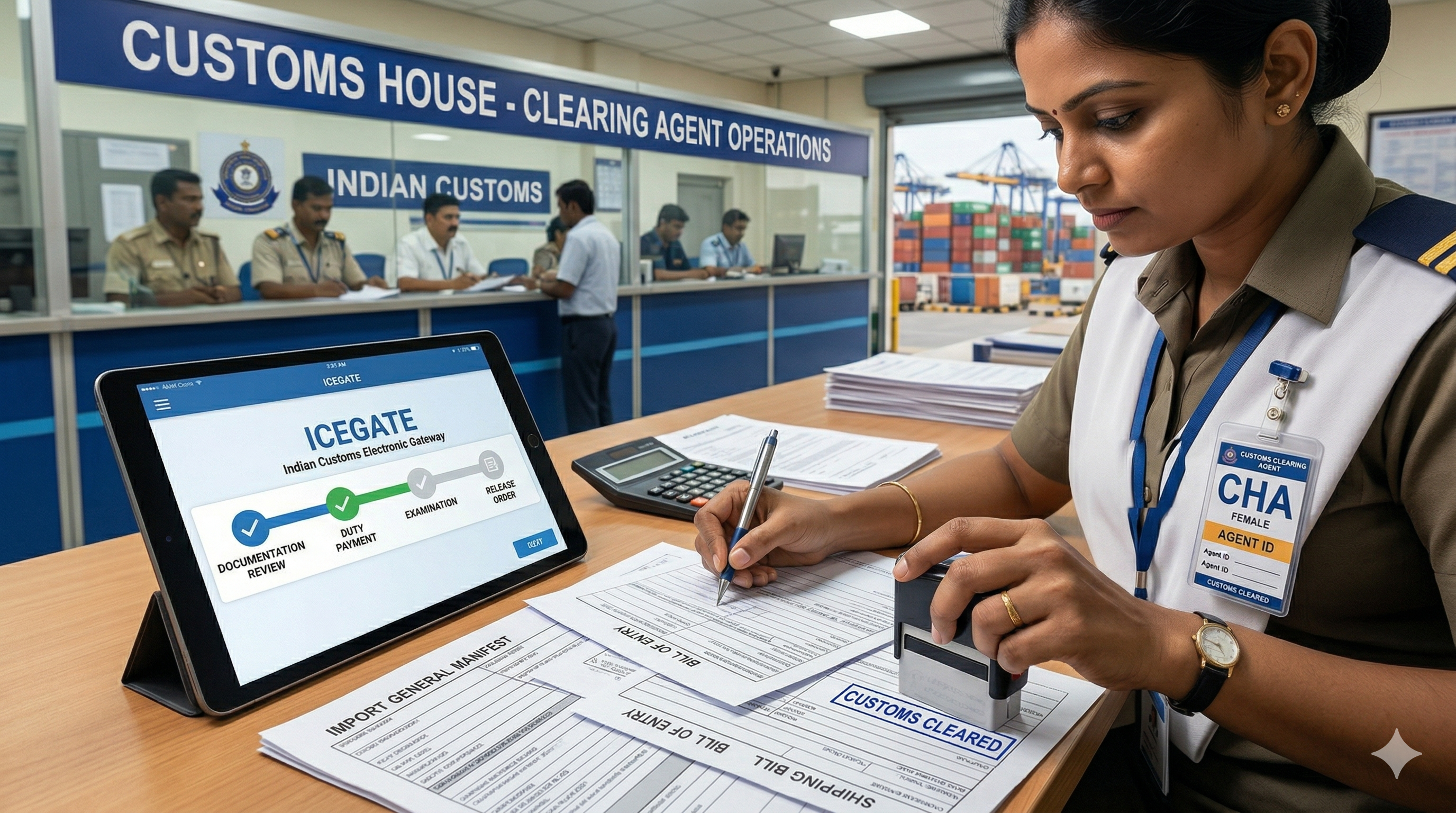
A Customs House Agent is more than a document filer. A good CHA is your compliance partner — someone who knows the tariff schedule, understands customs officer expectations, and can navigate problems before they become delays.

At Arrow Shipping, our CHA team has handled customs clearance across every major Indian port since 1994. We know Chennai Customs, JNPT, Mumbai Air Cargo, and every port's specific procedures. Our clients don't worry about HS codes, duty disputes, or examination outcomes — we manage that entirely.

Internal links for reference:

10-Point Customs Clearance Readiness Checklist

Use this checklist before your next shipment arrives at an Indian port or airport:

  • ? Commercial invoice prepared with correct declared value (CIF basis)
  • ? Packing list matches invoice line-by-line
  • ? Bill of Lading or Air Waybill received from carrier
  • ? Correct ITC-HS code confirmed with your CHA
  • ? Certificate of Origin obtained (for preferential duty)
  • ? Import licence or permit in hand (for regulated goods)
  • ? FSSAI / BIS / other regulatory approval ready (if applicable)
  • ? Funds ready for duty payment before cargo arrives
  • ? CHA appointed and documents shared 48 hours before arrival
  • ? Transport and delivery plan confirmed to avoid port storage charges

Frequently Asked Questions — Custom Clearance India

What is custom clearance in India?

Custom clearance is the official process of declaring imported or exported goods to Indian Customs, paying applicable duties, and obtaining authorisation for cargo release. It is governed by the Customs Act 1962, administered by CBIC, and executed electronically through the ICEGATE portal. Standard clearance takes 1–5 working days depending on the risk channel assigned.

What documents are required for customs clearance in India?

For imports: Bill of Entry, commercial invoice, packing list, Bill of Lading or Air Waybill, and certificate of origin. For exports: Shipping Bill, commercial invoice, packing list, and export licence if applicable. Regulated goods require additional approvals from FSSAI, BIS, DGFT, or other authorities depending on the commodity.

How long does customs clearance take in India?

Green channel cargo clears in 1–2 working days; yellow channel in 2–5 days; red channel in 5–10 days. AEO-certified importers receive priority processing and are more likely to be assigned to faster channels. Delays from incomplete documents or duty payment issues can extend this significantly.

What is a Customs House Agent (CHA)?

A CHA is a CBIC-licensed professional authorised to file customs declarations and manage the clearance process on behalf of importers and exporters. They handle Bill of Entry filing, HS code classification, duty assessment, examination coordination, and cargo release. Using a licensed CHA is mandatory for commercial shipments at Indian ports.

What are the three customs clearance channels in India?

Green channel: direct clearance without examination. Yellow channel: document verification only. Red channel: physical examination of goods. Channel assignment is done automatically by ICEGATE's risk management system based on the cargo type, declared value, importer history, and compliance record.

How is customs duty calculated in India?

Customs duty is calculated on the CIF value (Cost + Insurance + Freight) of the goods. The total charge includes Basic Customs Duty, IGST (5%–28%), and Social Welfare Surcharge. The applicable rate depends on the ITC-HS code of the commodity. IGST paid on imports can be claimed as input tax credit by GST-registered businesses.

What happens if customs clearance is delayed?

Delayed clearance triggers demurrage charges from the port and the shipping line, which escalate daily. At Chennai Port, demurrage can reach INR 5,000–25,000 per container per day after the free period ends. Additionally, prolonged port storage increases cargo damage risk. Engaging an experienced CHA and filing complete documents before arrival prevents most delays.

How does Arrow Shipping handle custom clearance?

Arrow Shipping manages every step of the customs clearance process — from document collection and HS classification to ICEGATE filing, duty payment, examination coordination, and cargo release. As an AEO-certified CHA with 30+ years of experience at Chennai and all major Indian ports, we ensure fast, compliant clearance with minimal demurrage exposure for our clients.

Related Resources

Clearing House Agent: Complete Guide for Import and Export Customs Clearance

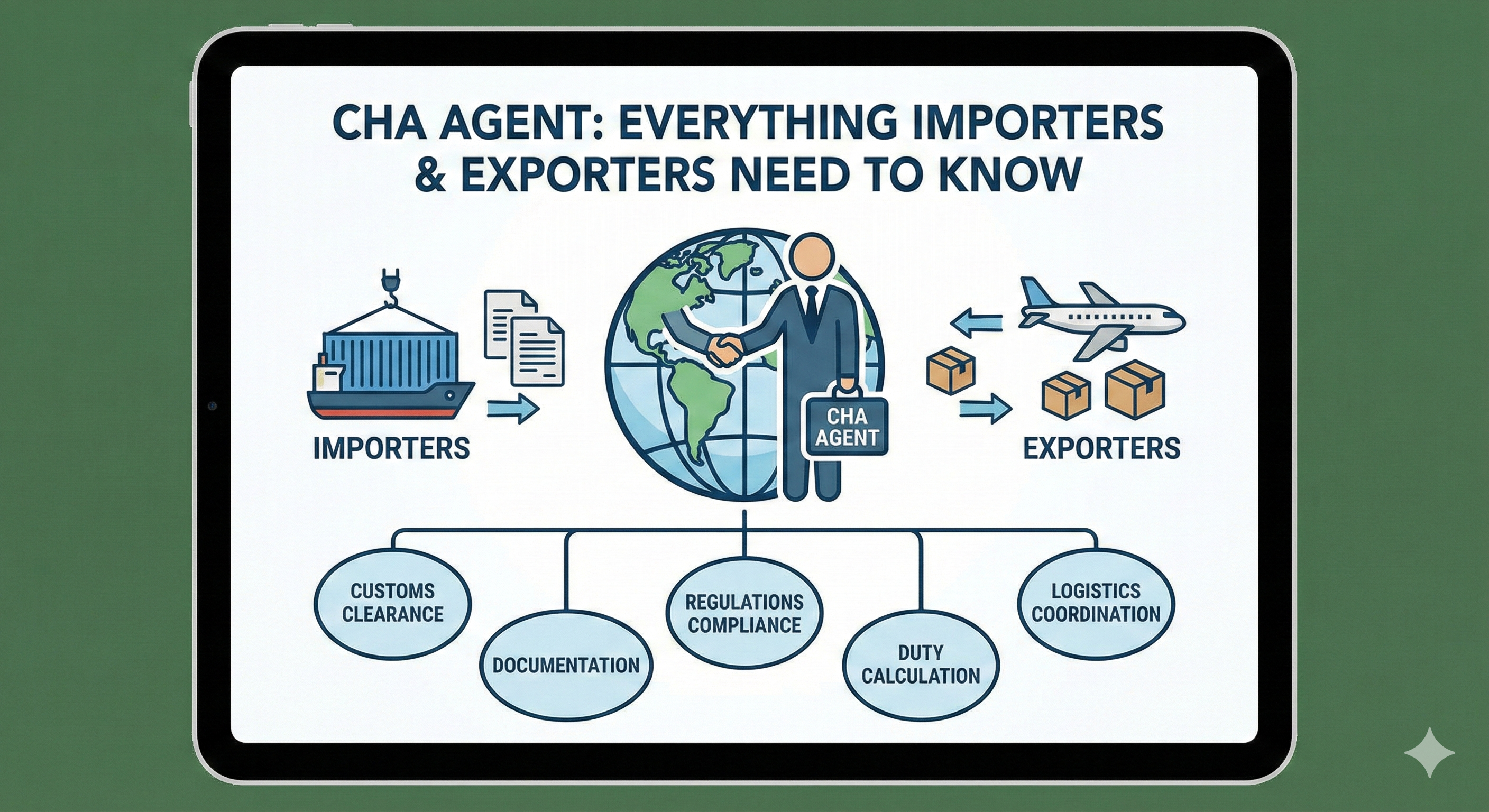
International trade involves complex customs regulations, documentation requirements, and compliance procedures. Businesses importing or exporting goods must ensure that their shipments meet all regulatory requirements before cargo can be released. This is where a clearing house agent plays a critical role.

A clearing house agent manages customs clearance processes on behalf of importers and exporters. From documentation preparation to duty calculation and coordination with customs authorities, these professionals ensure smooth cargo movement. Choosing an experienced clearing house agent helps businesses avoid delays, penalties, and operational disruptions.

With decades of expertise in customs clearance and logistics, Arrow Shipping provides professional clearing house agent services for seamless import and export operations.

What Is a Clearing House Agent?

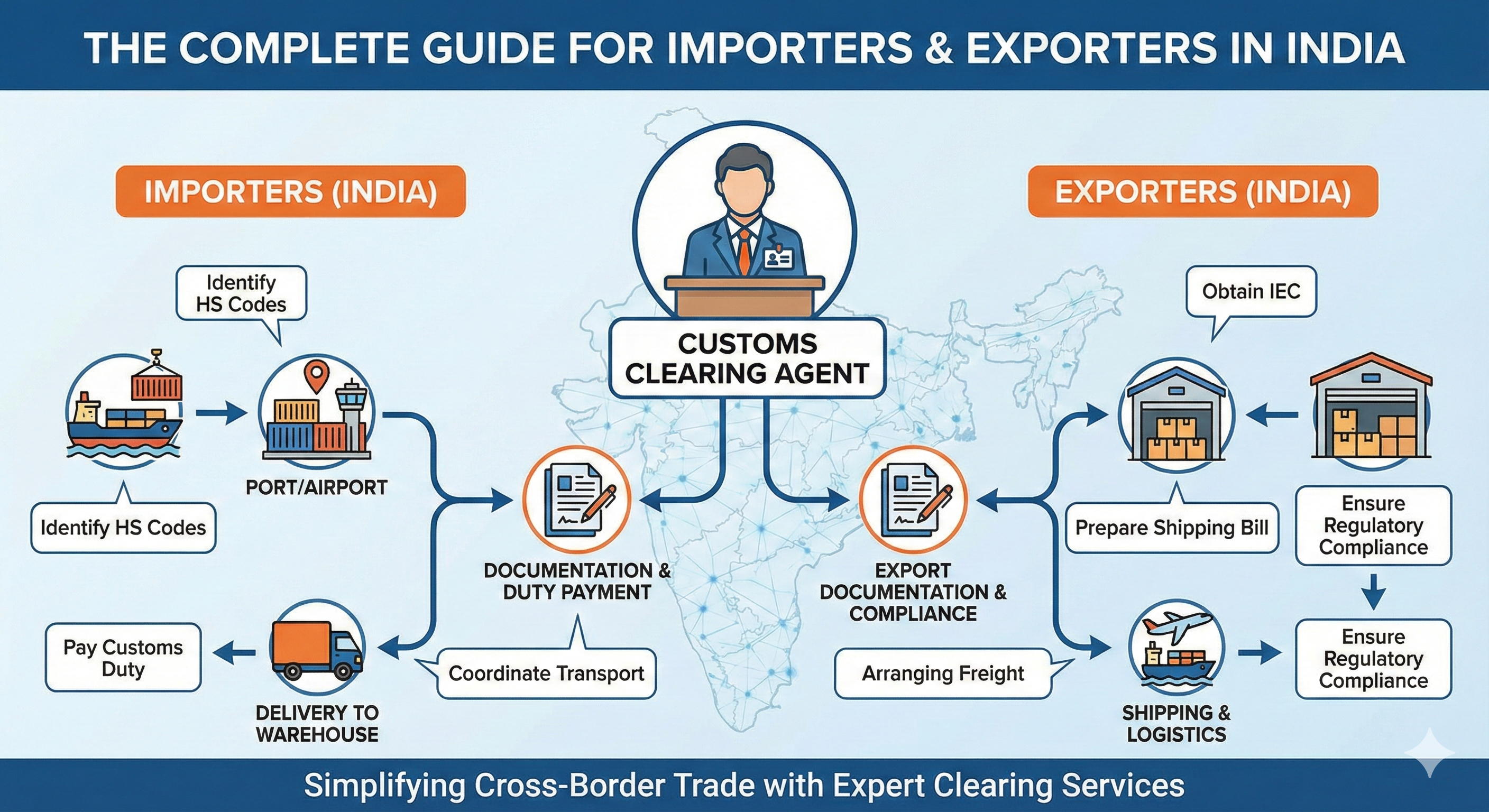
A clearing house agent is a licensed professional responsible for handling customs clearance procedures for import and export shipments. They act as intermediaries between businesses and customs authorities.

Their primary objective is to ensure that goods comply with customs regulations and are cleared efficiently.

Key Responsibilities

  • Preparation of import and export documentation
  • Filing Bills of Entry and Shipping Bills
  • Duty calculation and assessment
  • Coordination with customs authorities
  • Cargo examination handling
  • Clearance and release of goods

Clearing house agents simplify complex customs procedures.

Importance of a Clearing House Agent in International Trade

Ensures Regulatory Compliance

Customs regulations require accurate documentation and declarations. Clearing house agents ensure compliance with applicable laws.

Reduces Clearance Delays

Professional handling speeds up cargo clearance and avoids demurrage charges.

Minimizes Risk

Incorrect classification or documentation can result in penalties. Clearing house agents help prevent errors.

Simplifies Logistics Coordination

They act as a single point of contact between customs, ports, and logistics providers.

Import Clearance Services by Clearing House Agent

Import clearance involves multiple steps and documentation.

Import Services Include

  • Bill of Entry filing
  • Duty assessment
  • Cargo examination coordination
  • Customs release
  • Delivery planning

Arrow Shipping ensures smooth import clearance operations.

Export Clearance Services

Export shipments require proper documentation and regulatory compliance.

Export Services Include

  • Shipping bill preparation
  • Export documentation verification
  • Customs clearance coordination
  • Cargo movement to port or airport

These services ensure timely shipment dispatch.

Clearing House Agent for Air Cargo

Air cargo shipments require fast processing and documentation accuracy.

Clearing house agents handle:

  • Air import clearance
  • Air export clearance
  • Airline coordination
  • Airport customs processing

Arrow Shipping ensures quick air cargo clearance.

Clearing House Agent for Sea Cargo

Sea cargo involves containerized and bulk shipments.

Services include:

  • FCL clearance
  • LCL clearance
  • Port coordination
  • Container release

Professional handling ensures efficient sea cargo clearance.

Documents Handled by Clearing House Agents

Accurate documentation is critical.

Common documents include:

  • Commercial invoice
  • Packing list
  • Bill of lading
  • Air waybill
  • Bill of entry
  • Shipping bill
  • Certificate of origin

Arrow Shipping ensures proper documentation.

Industries That Use Clearing House Agent Services

Clearing house agents support various industries:

  • Manufacturing
  • Automotive
  • Electronics
  • Pharmaceuticals
  • Textile exports
  • Engineering goods

Arrow Shipping provides industry-specific solutions.

Challenges in Customs Clearance

Documentation Errors

Incorrect documents delay shipments.

Regulatory Changes

Frequent policy updates require expert knowledge.

Cargo Examination Delays

Proper coordination speeds up inspections.

Duty Calculation Issues

Correct classification prevents disputes.

Clearing house agents resolve these challenges.

Why Choose Arrow Shipping as Clearing House Agent

Experienced Customs Professionals

Arrow Shipping has decades of customs clearance experience.

Licensed CHA Services

Authorized to handle import export clearance.

End-to-End Logistics Support

Freight forwarding and customs clearance under one roof.

Strategic Locations

Operations in Chennai and Delhi.

Clearing House Agent vs Freight Forwarder

Clearing House Agent

  • Focus on customs clearance
  • Handles documentation
  • Ensures regulatory compliance

Freight Forwarder

  • Handles transportation
  • Coordinates carriers
  • Manages cargo movement

Arrow Shipping provides both services.

Clearing House Agent Process

Step-by-step process:

  1. Document collection
  2. Customs filing
  3. Duty calculation
  4. Cargo examination
  5. Clearance approval
  6. Cargo release
  7. Delivery coordination

Arrow Shipping manages each stage.

Choosing the Right Clearing House Agent

Consider:

  • Experience in customs clearance
  • Licensing and compliance
  • Industry expertise
  • Service coverage
  • Transparent communication

Arrow Shipping meets these requirements.

Future of Clearing House Agent Services

With digitization of customs procedures and growing trade volumes, clearing house agents play an increasingly important role. Businesses require faster clearances and compliance support.

Professional agents help streamline global trade.

Conclusion

A professional clearing house agent is essential for smooth import and export operations. From documentation to customs clearance and cargo release, expert handling ensures compliance and efficiency.

With decades of experience, Arrow Shipping provides reliable clearing house agent services for businesses engaged in international trade.


Freight Forwarding: Complete Logistics Solutions for Import and Export

Freight Forwarding: Complete Logistics Solutions for Import and Export


Introduction

In today’s global trade environment, efficient cargo movement is essential for business success. Whether importing raw materials or exporting finished goods, companies rely on freight forwarding services to ensure timely and compliant shipment handling. Freight forwarding simplifies complex logistics processes and connects businesses to international markets.

Freight forwarding involves planning, coordination, documentation, customs clearance, and transportation management. A professional freight forwarding partner ensures cargo moves efficiently from origin to destination while minimizing delays and costs.

With decades of logistics expertise, Arrow Shipping provides reliable freight forwarding services tailored to importers and exporters across industries.

What Is Freight Forwarding?

Freight forwarding is the coordination and shipment of goods from one location to another using air, sea, rail, or road transportation. Freight forwarders act as intermediaries between shippers and carriers, managing the entire logistics process.

Core Functions of Freight Forwarding

  • Cargo booking with airlines or shipping lines
  • Documentation preparation
  • Customs clearance coordination
  • Cargo consolidation
  • Transportation planning
  • Delivery coordination

Freight forwarders ensure seamless cargo movement and regulatory compliance.

Why Freight Forwarding Is Important

Simplifies Global Shipping

Freight forwarding integrates multiple logistics components into a single coordinated process.

Ensures Compliance

International trade regulations require accurate documentation and customs procedures.

Saves Time

Efficient coordination reduces shipment delays.

Reduces Cost

Optimized routing and carrier selection help control logistics expenses.

Types of Freight Forwarding Services

Air Freight Forwarding

Air freight is ideal for urgent shipments requiring fast delivery.

Benefits include:

  • Fast transit time
  • Secure handling
  • Global connectivity
  • Reliable schedules

Arrow Shipping coordinates air freight with customs clearance support.

Sea Freight Forwarding

Sea freight is suitable for large and bulk shipments.

Services include:

  • FCL shipments
  • LCL shipments
  • Container handling
  • Port coordination

Sea freight provides cost-effective logistics solutions.

Import Freight Forwarding Services

Import freight forwarding involves:

  • Cargo arrival coordination
  • Documentation verification
  • Customs clearance
  • Duty assessment
  • Delivery coordination

Arrow Shipping ensures smooth import cargo movement.

Export Freight Forwarding Services

Export freight forwarding includes:

  • Export documentation
  • Shipping bill filing
  • Carrier booking
  • Customs clearance
  • Shipment dispatch

These services ensure timely exports.

Freight Forwarding and Customs Clearance

Freight forwarding and customs clearance work together. Without proper customs handling, shipments cannot move smoothly.

Arrow Shipping provides integrated services including:

  • Bill of Entry filing
  • Shipping bill processing
  • Duty calculation
  • Cargo examination coordination
  • Clearance and release

This integrated approach reduces delays.

Industries Using Freight Forwarding Services

Freight forwarding supports multiple industries:

  • Automotive components
  • Electronics and electrical equipment
  • Pharmaceuticals
  • Textile and apparel
  • Engineering goods
  • Consumer products

Arrow Shipping provides industry-specific logistics solutions.

Documents Required in Freight Forwarding

Accurate documentation is essential for freight forwarding.

Common documents include:

  • Commercial invoice
  • Packing list
  • Bill of lading
  • Air waybill
  • Shipping bill
  • Bill of entry
  • Certificate of origin

Professional handling prevents delays.

Challenges in Freight Forwarding

Port Congestion

Efficient planning reduces delays.

Documentation Errors

Expert verification ensures accuracy.

Regulatory Changes

Freight forwarders stay updated with trade rules.

Multi-Party Coordination

Freight forwarders manage carriers and customs authorities.

Why Choose Arrow Shipping for Freight Forwarding

Experienced Logistics Provider

Arrow Shipping has nearly three decades of experience.

End-to-End Services

Freight forwarding, customs clearance, and logistics support.

Strategic Locations

Operations in Chennai and Delhi.

Compliance-Focused Approach

Ensures smooth cargo movement.

Freight Forwarding Process

Step-by-step process:

  1. Cargo booking
  2. Documentation preparation
  3. Carrier coordination
  4. Customs clearance
  5. Shipment movement
  6. Arrival handling
  7. Final delivery

Arrow Shipping manages the complete process.

Choosing the Right Freight Forwarding Company

Consider the following:

  • Experience in logistics
  • Customs expertise
  • Service coverage
  • Transparent communication
  • Reliable coordination

Arrow Shipping meets these requirements.


Future of Freight Forwarding

Freight forwarding is evolving with digital documentation, faster customs systems, and improved logistics infrastructure. Businesses require efficient and compliant cargo movement.

Professional freight forwarders play a key role in global trade growth.

Conclusion

Freight forwarding is essential for efficient import and export operations. From cargo booking to customs clearance and delivery, a reliable freight forwarding partner ensures smooth logistics management.

With decades of experience and integrated services, Arrow Shipping provides dependable freight forwarding solutions for businesses engaged in global trade.


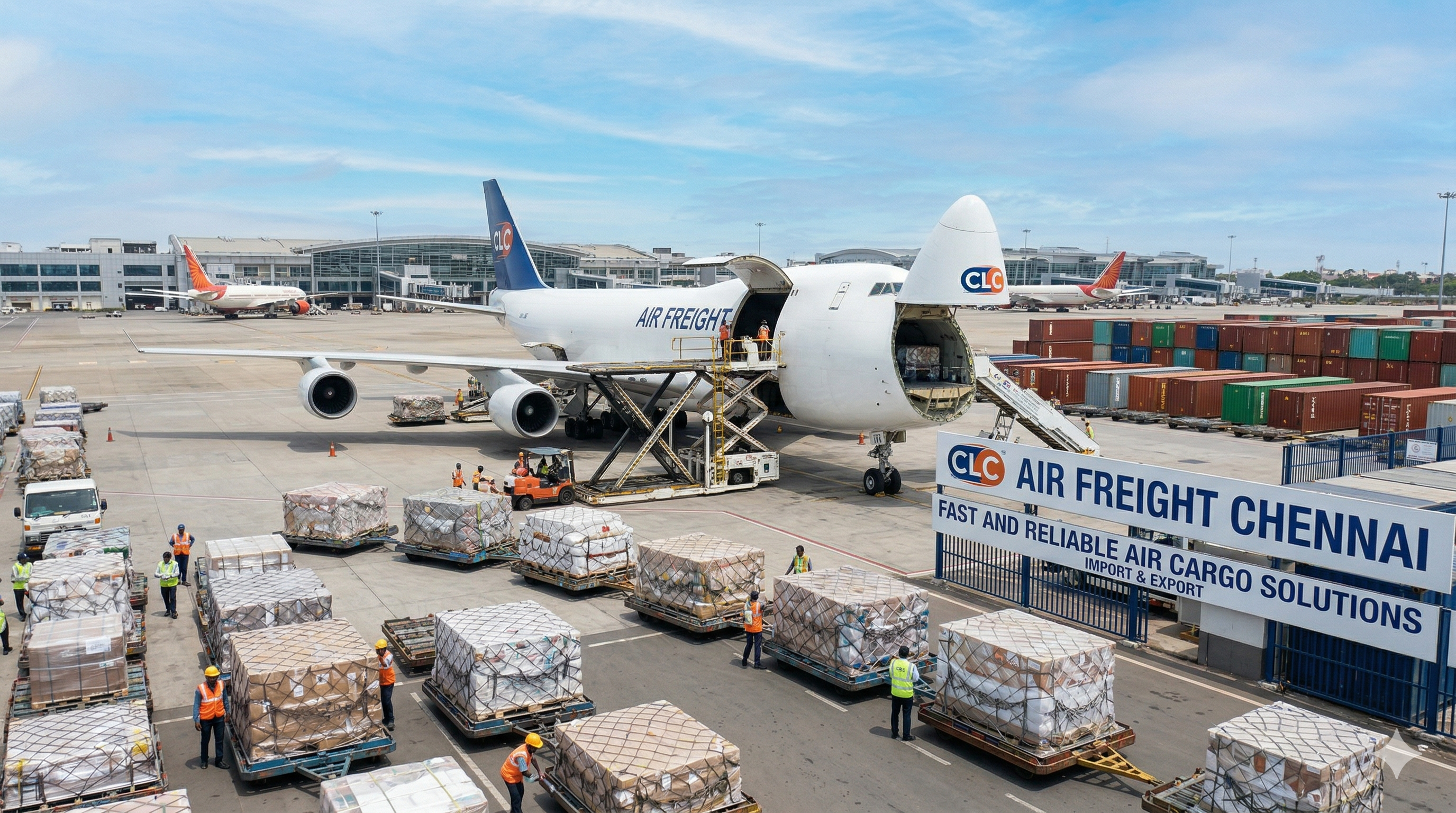
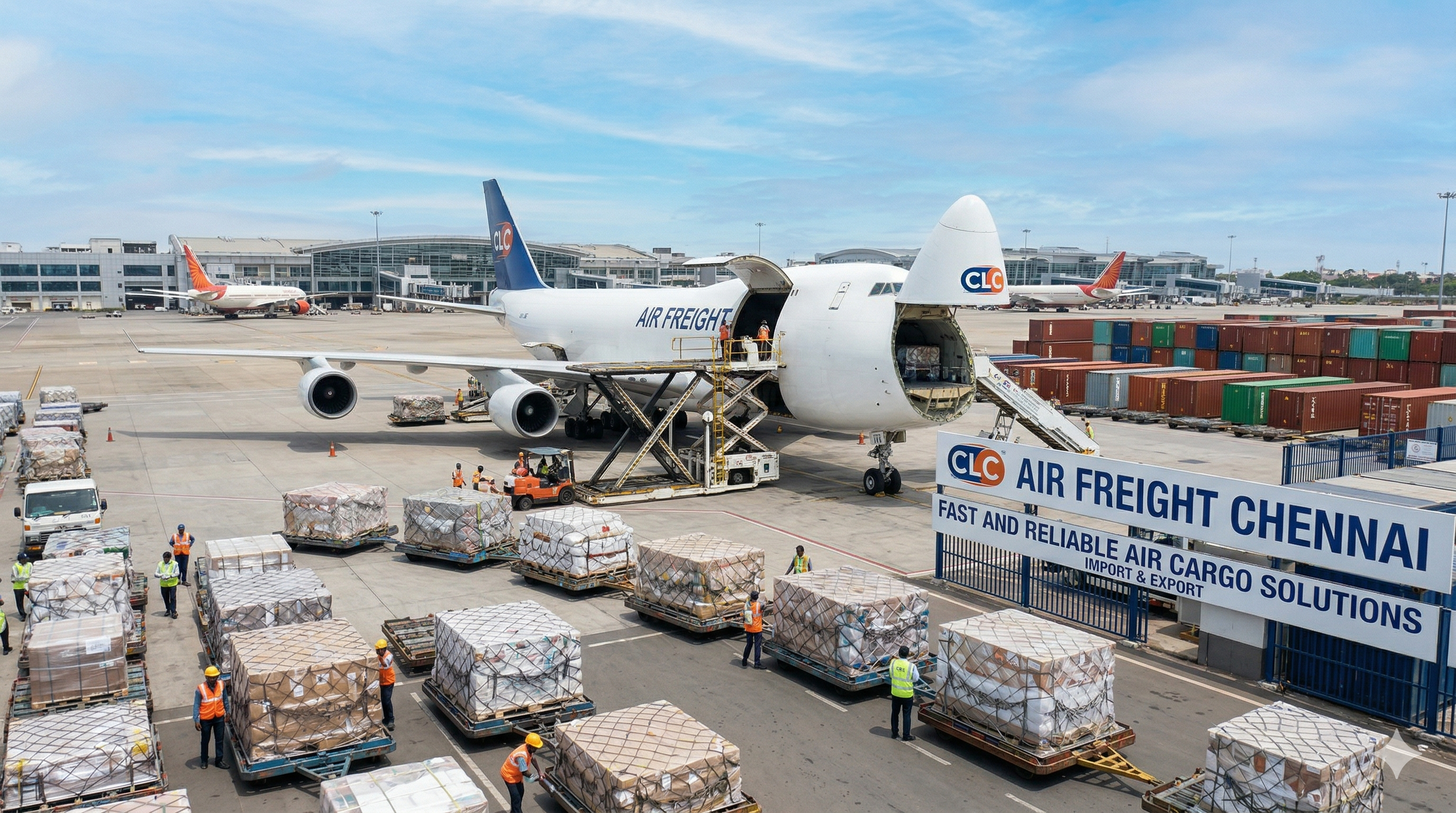
Air Freight Chennai: Fast and Reliable Air Cargo Solutions for Import & Export


Chennai is one of India’s major air cargo gateways, connecting South India to global markets through efficient international flight networks. Businesses dealing with time-sensitive shipments depend on air freight Chennai services for speed, reliability, and secure cargo handling.

Air freight is the preferred logistics solution when delivery timelines are critical. Whether importing high-value goods or exporting urgent consignments, professional air freight services ensure smooth cargo movement, regulatory compliance, and reduced transit time.

With decades of customs and logistics expertise, Arrow Shipping provides dependable air freight services in Chennai, supporting businesses with end-to-end cargo management.

Why Choose Air Freight in Chennai?

Air freight is widely used for shipments that require fast delivery and secure handling. Chennai’s international airport provides global connectivity, making it ideal for air cargo movement.

Key Benefits of Air Freight Chennai Services

  • Faster transit compared to sea freight
  • Ideal for urgent shipments
  • Secure cargo handling
  • Reduced inventory holding costs
  • Reliable global connectivity
  • Minimal risk of damage

Businesses across industries rely on air freight to meet tight delivery schedules.

Air Freight Services Offered in Chennai

A professional air freight service includes multiple logistics components to ensure smooth cargo movement.

Import Air Freight Services

Import air freight requires careful coordination with airlines and customs authorities.

Services include:

  • Air cargo booking and coordination
  • Import documentation handling
  • Customs clearance support
  • Cargo handling at airport
  • Delivery coordination

Arrow Shipping ensures efficient import air freight handling in Chennai.

Export Air Freight Services

Export air freight requires accurate documentation and timely processing.

Export services include:

  • Export documentation preparation
  • Shipping bill filing
  • Airline coordination
  • Cargo consolidation
  • Export customs clearance

These services ensure shipments depart on schedule.

Air Freight and Customs Clearance in Chennai

Customs clearance is one of the most critical aspects of air freight operations. Delays in documentation can hold cargo at the airport.

Arrow Shipping provides integrated air freight and customs clearance services including:

  • Bill of Entry filing
  • Shipping bill processing
  • Duty calculation
  • Customs examination coordination
  • Cargo release

This integrated approach ensures faster cargo movement.

Types of Cargo Handled Through Air Freight Chennai

Air freight services support various types of shipments including:

  • Urgent commercial shipments
  • Electronics and high-value goods
  • Pharmaceutical products
  • Automotive spare parts
  • Industrial components
  • Samples and small consignments

Arrow Shipping handles diverse cargo with professional coordination.

Industries Using Air Freight Chennai Services

Air freight is commonly used by industries such as:

  • Electronics manufacturing
  • Automotive components
  • Pharmaceuticals
  • Textile exports
  • Engineering goods
  • E-commerce businesses

Each industry requires fast and reliable cargo movement, making air freight essential.

Air Freight vs Sea Freight

Understanding the difference helps businesses choose the right option.

Air Freight

  • Fast delivery
  • Higher cost
  • Ideal for urgent cargo
  • Secure handling

Sea Freight

  • Cost-effective
  • Longer transit time
  • Ideal for bulk shipments
  • Suitable for heavy cargo

Arrow Shipping helps businesses choose the most efficient shipping method.

Process of Air Freight Chennai

Step-by-step air freight process:

  1. Cargo pickup or delivery to airport
  2. Documentation preparation
  3. Airline booking
  4. Customs clearance
  5. Cargo loading and departure
  6. Arrival and destination handling
  7. Final delivery

Arrow Shipping manages each step efficiently.

Why Choose Arrow Shipping for Air Freight Chennai

Experienced Logistics Provider

With nearly three decades of experience, Arrow Shipping understands air cargo procedures.

End-to-End Services

The company provides freight forwarding, customs clearance, and delivery coordination.

Fast Customs Clearance

Licensed CHA services ensure minimal delays.

Reliable Coordination

Arrow Shipping works closely with airlines and airport authorities.

Challenges in Air Freight and How Experts Solve Them

Documentation Errors

Proper verification ensures smooth clearance.

Airport Delays

Efficient planning reduces congestion-related delays.

Regulatory Compliance

Expert knowledge ensures adherence to customs rules.

Cargo Handling Risks

Professional packing and coordination minimize damage.

When Should You Choose Air Freight?

Air freight is ideal when:

  • Shipment is urgent
  • Cargo is high-value
  • Small shipment size
  • Tight delivery deadline
  • Perishable goods

Businesses benefit from faster delivery timelines.

Chennai as an Air Cargo Hub

Chennai continues to grow as a major air cargo hub due to:

  • International connectivity
  • Industrial manufacturing base
  • Export-driven industries
  • Efficient airport infrastructure

These advantages make air freight Chennai services highly reliable.

Conclusion

Air freight plays a crucial role in fast and efficient global cargo movement. Businesses requiring quick delivery, secure handling, and reliable logistics depend on professional air freight Chennai services.

With decades of experience, integrated customs clearance, and reliable coordination, Arrow Shipping provides efficient air freight solutions tailored to business needs.


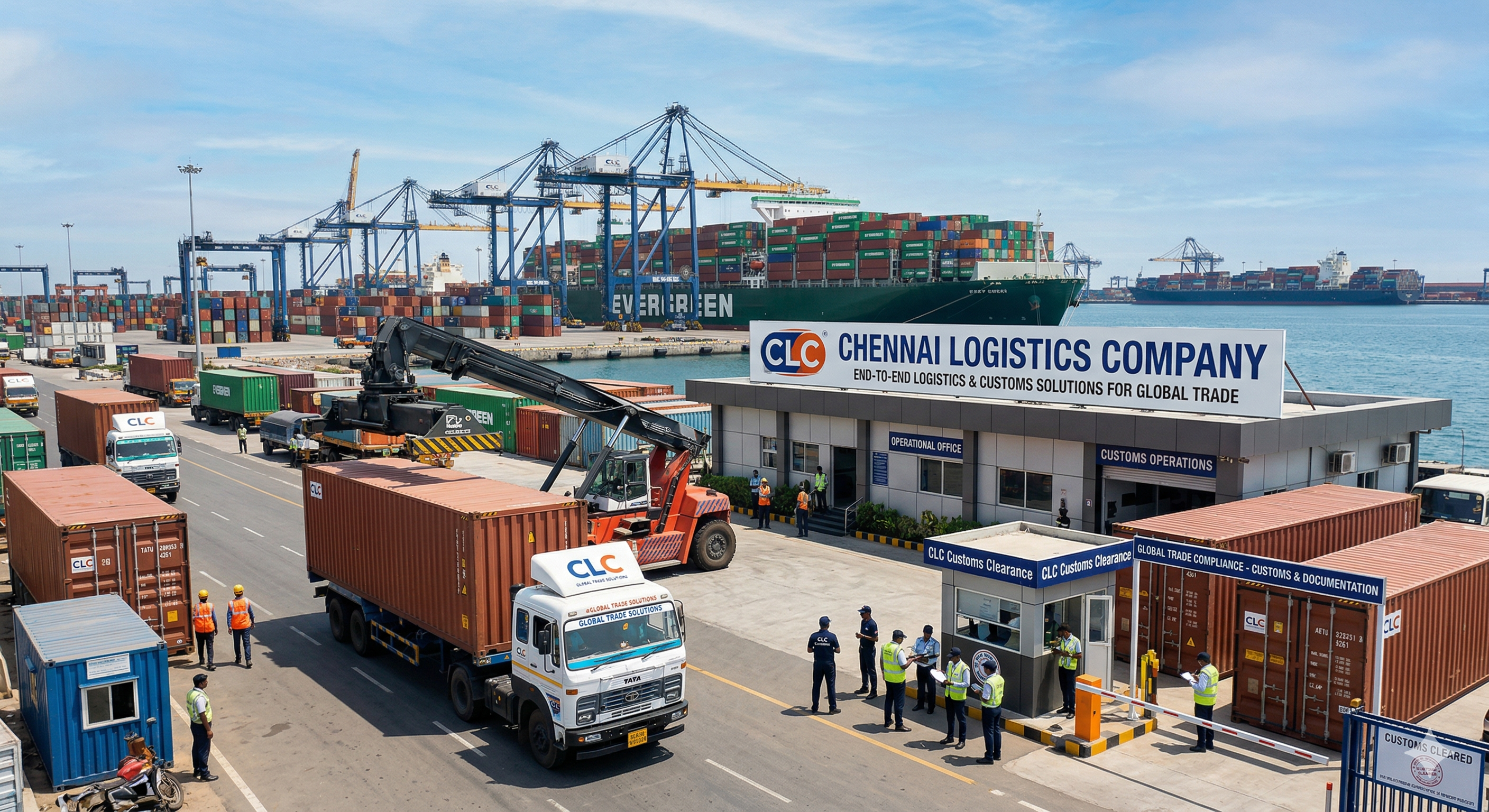
Chennai Logistics Company: End-to-End Logistics and Customs Solutions for Global Trade

Chennai has emerged as one of India’s most important logistics and trade gateways, connecting businesses across South India to international markets. With its major seaport, international airport, and strong industrial ecosystem, the city plays a crucial role in import and export operations. For businesses engaged in global trade, choosing the right Chennai logistics company is essential for ensuring smooth cargo movement, compliance, and cost efficiency.

A professional logistics company does more than transportation. It coordinates customs clearance, freight forwarding, documentation, warehousing, and delivery—ensuring that shipments move seamlessly from origin to destination. With decades of experience in logistics and customs operations, Arrow Shipping provides reliable and efficient logistics solutions tailored to business requirements.

Why Chennai Is a Major Logistics Hub

Chennai’s strategic location makes it one of the most preferred logistics hubs in India.

Key Advantages of Chennai for Logistics

  • Access to major seaports for international shipping
  • International airport supporting air cargo movement
  • Strong road connectivity across South India
  • Presence of major manufacturing industries
  • Gateway for automotive and engineering exports

These advantages make Chennai an ideal location for businesses handling imports and exports.

What Does a Chennai Logistics Company Offer?

A professional Chennai logistics company typically provides integrated services including:

Arrow Shipping combines all these services to deliver complete logistics solutions under one roof.

Arrow Shipping – Trusted Chennai Logistics Company Since 1994

Established in 1994, Arrow Shipping has built a strong reputation as a reliable logistics and customs service provider.

Licensed Customs House Agent

As a licensed CHA, Arrow Shipping ensures full compliance with Indian customs regulations while handling cargo clearance.

End-to-End Logistics Expertise

The company offers integrated services including freight forwarding, customs clearance, and warehousing support.

Strategic Chennai Operations

Operating in Chennai allows Arrow Shipping to efficiently handle cargo through major ports and airports, ensuring faster turnaround time.

Import Logistics Services in Chennai

Import logistics requires precise documentation, duty calculation, and coordination with customs authorities.

Import Services Include

  • Bill of Entry filing
  • Duty assessment and payment
  • Customs examination coordination
  • Cargo release and delivery

Arrow Shipping ensures smooth import clearance and timely cargo movement.

Export Logistics Services in Chennai

Exporters require efficient logistics support to meet shipping schedules and compliance requirements.

Export Services Include

  • Shipping Bill preparation
  • Export documentation handling
  • Customs clearance coordination
  • Cargo movement to port or airport

Arrow Shipping supports exporters in Chennai with efficient logistics planning.

Freight Forwarding Services

Freight forwarding is a key component of logistics operations.

Air Freight Forwarding

Air freight is suitable for urgent shipments and high-value cargo. Arrow Shipping coordinates airline bookings, documentation, and customs clearance.

Sea Freight Forwarding

Sea freight is ideal for bulk shipments. Services include:

  • FCL shipments
  • LCL shipments
  • Container coordination
  • Port handling

Arrow Shipping ensures cost-effective and compliant sea freight movement.

Customs Clearance Expertise

Customs clearance is one of the most critical services offered by a Chennai logistics company.

Arrow Shipping handles:

  • Import customs clearance
  • Export customs clearance
  • Documentation verification
  • Duty calculation
  • Cargo examination coordination

This ensures compliance and reduces delays.


Bonded Warehousing Support

Bonded warehousing allows importers to store goods without immediate duty payment.

Benefits Include

  • Deferred duty payment
  • Secure storage
  • Partial clearance flexibility
  • Inventory control

Arrow Shipping provides bonded warehousing support as part of its logistics solutions.

Industries Served by Chennai Logistics Companies

Chennai supports a diverse industrial base. Logistics services are widely used by:

  • Automotive manufacturers
  • Electronics companies
  • Engineering industries
  • Textile exporters
  • Pharmaceutical companies

Arrow Shipping provides customized logistics solutions for these industries.

Challenges Businesses Face Without a Logistics Partner

Regulatory Complexity

Import-export regulations require expert handling.

Documentation Errors

Incorrect documentation can delay shipments.

Port Congestion

Efficient coordination is required to avoid demurrage.

Multi-Party Coordination

Managing carriers, customs, and transporters can be complex.

A professional Chennai logistics company helps resolve these challenges.

How to Choose the Right Chennai Logistics Company

Consider the following factors:

  • Industry experience
  • Customs expertise
  • End-to-end service capability
  • Presence in Chennai ports and airport
  • Transparent communication

Arrow Shipping meets these criteria with nearly 30 years of logistics experience.

Why Choose Arrow Shipping in Chennai

Experienced Team

Arrow Shipping has extensive knowledge of customs and logistics operations.

Integrated Services

Clients benefit from freight forwarding, customs clearance, and logistics support in one place.

Compliance-Focused Operations

The company ensures regulatory accuracy for smooth cargo movement.

Reliable Coordination

Efficient handling reduces delays and operational costs.

The Future of Logistics in Chennai

Chennai continues to grow as a major logistics and trade hub. Increasing exports, infrastructure improvements, and digital customs systems are improving cargo movement efficiency.

Businesses that partner with experienced logistics providers will benefit from streamlined supply chains and faster delivery timelines.

Arrow Shipping continues to support businesses with reliable logistics solutions in Chennai.

Conclusion

Choosing the right Chennai logistics company is essential for smooth import and export operations. From customs clearance and freight forwarding to warehousing and documentation, a reliable logistics partner ensures efficiency and compliance.

With decades of experience, strong Chennai operations, and end-to-end logistics expertise, Arrow Shipping is a trusted partner for businesses seeking professional logistics solutions.


DG Shipping Takes Action to Curb Unfair Pricing by Shipping Lines


DG Shipping Steps In to Address Unfair Pricing by Shipping Lines

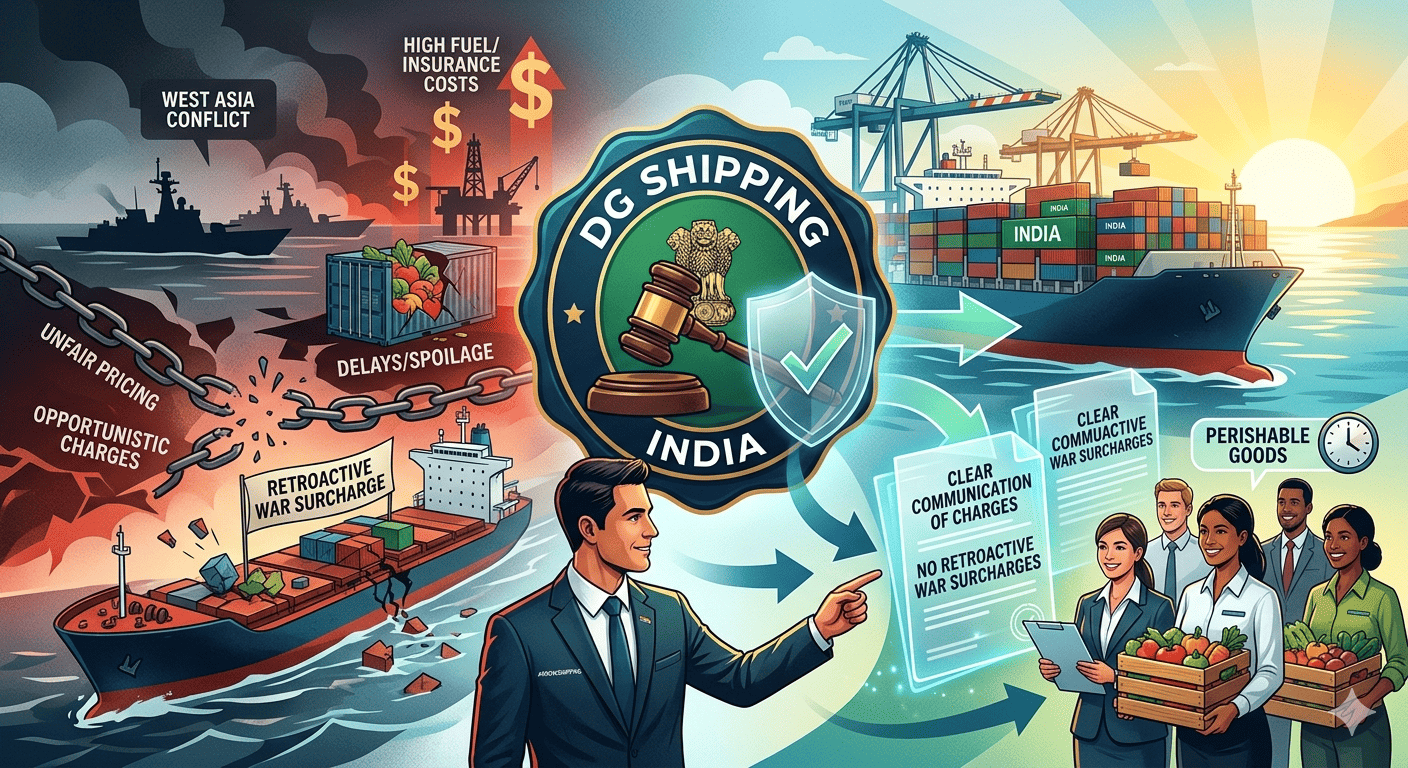
India’s maritime regulator, the Directorate General of Shipping (DG Shipping), has recently taken an important step to address growing concerns from exporters about unfair and non-transparent pricing practices by shipping lines.

The move comes after exporters reported instances of “predatory and unnecessary charging,” particularly in the form of retrospective war surcharges. In response, DG Shipping issued a circular directing shipping companies and their agents to refrain from opportunistic pricing and to clearly communicate all applicable charges to exporters in advance.

Why Exporters Raised the Concern

During a recent meeting with the regulator, exporters highlighted that some shipping lines had imposed war surcharges retroactively. These additional charges can reach up to $4,000 for perishable cargo and around $3,000 for every 40-foot container, creating a significant financial burden.

According to Ajay Sahai of the Federation of Indian Export Organisations (FIEO), some of these surcharges were even applied to vessels that had already arrived before the surcharge was officially introduced. For exporters, such unexpected charges disrupt planning and increase operational costs.

Regulatory Response

DG Shipping has indicated that it may invoke provisions under the Merchant Shipping Act to ensure transparency in shipping charges. However, officials clarified that the advisory is not intended to fix freight prices, but rather to discourage shipping lines from taking advantage of volatile market conditions through opportunistic pricing.

The regulator’s objective is simple: ensure fair communication of charges and maintain transparency within the shipping ecosystem.

Operational Challenges for Exporters

Exporters have also raised additional operational concerns. In some cases, cargo has reportedly been left stranded at certain ports, creating major logistical challenges. This issue is particularly critical for perishable goods such as fruits and vegetables, where delays can lead to spoilage and financial losses.

Industry sources also indicate that shipping lines are demanding additional payments for consignments that are already in transit, further complicating the situation for exporters.

Impact of the West Asia Conflict

The ongoing geopolitical tensions in West Asia are another major factor affecting the shipping industry. According to industry estimates, Indian exports worth $8–10 billion could be impacted if disruptions continue.

Shipping costs have also risen sharply. Marine fuel prices have increased from approximately $520 per metric tonne to nearly $880, while insurance premiums have also surged. These additional costs are ultimately passed down the supply chain, putting further pressure on exporters.

Possible Solutions Under Discussion

To reduce disruptions, discussions are currently underway within the industry to explore alternative shipping options. These include operating smaller vessels or using non-vessel operating common carriers (NVOCCs) to transport essential goods from India to West Asia.

There are also indications that the United Arab Emirates government may consider providing logistical support to ease cargo movement. However, industry experts believe that even with such support, returning to pre-conflict freight levels may remain difficult due to higher fuel and operational costs.

A Perspective from ArrowShipping

As the head of ArrowShipping and an experienced Customs House Agent working closely with exporters and logistics stakeholders, I believe transparency is critical in maintaining a healthy trade environment.

Exporters already operate under significant pressure from fluctuating fuel prices, insurance costs, and global geopolitical uncertainties. When unexpected surcharges are introduced without clear communication, it not only disrupts logistics planning but also affects the competitiveness of Indian exports in global markets.

The advisory from DG Shipping is therefore a timely and necessary step. While it does not regulate pricing directly, it reinforces the importance of fair practices, accountability, and clear communication within the shipping industry.

Looking Ahead

India’s export ecosystem depends heavily on a stable and transparent logistics framework. Strengthening coordination between regulators, shipping lines, freight forwarders, and customs professionals will be essential to ensure that trade flows smoothly even during challenging global conditions.

For exporters and logistics providers alike, transparency and cooperation will remain the key to navigating the evolving dynamics of international shipping.


Strait of Hormuz Crisis: India Waives Port Procedures for Returning Export Cargo

Strait of Hormuz Crisis: What India’s New Port Relief Means for Exporters

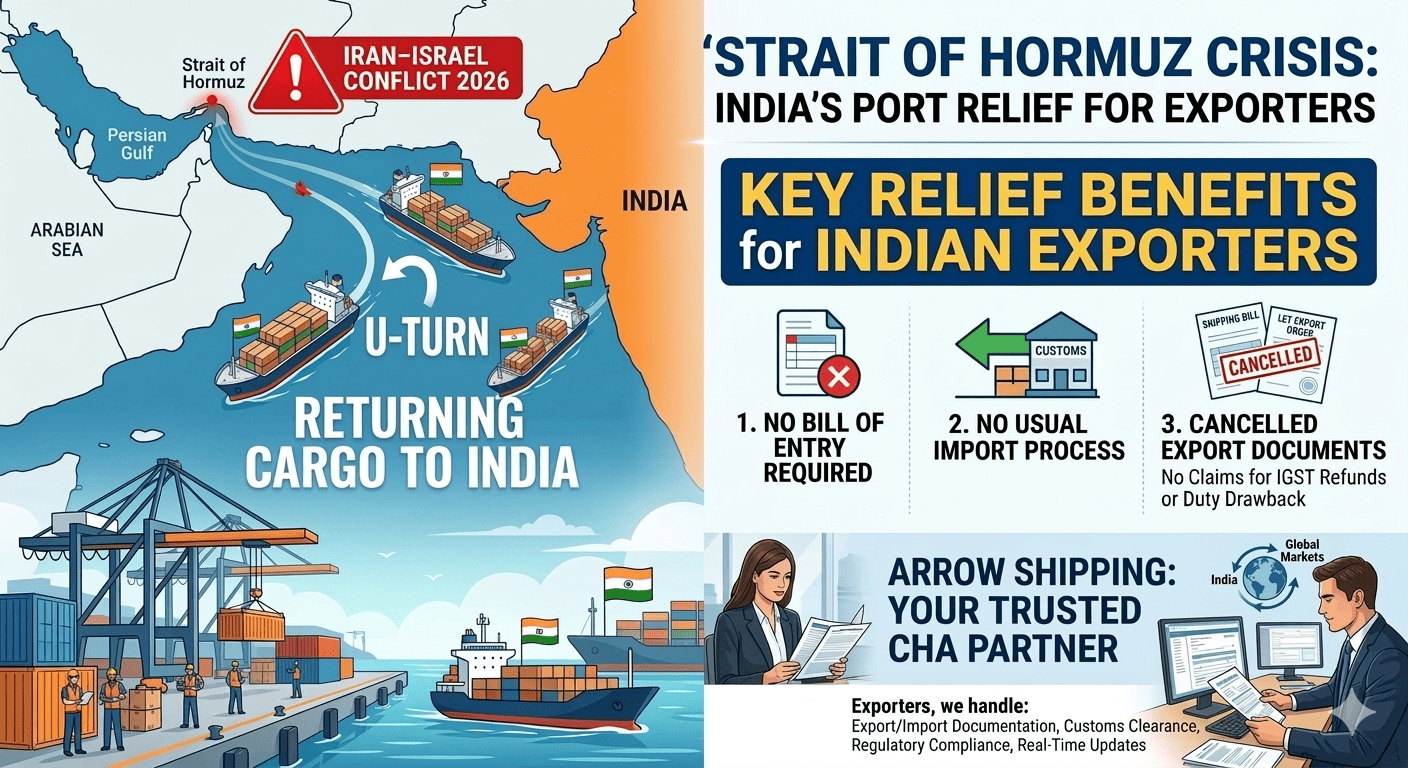
Global trade depends heavily on stable maritime routes. One of the most important shipping corridors in the world is the Strait of Hormuz, which connects the Persian Gulf to international markets. Recently, disruptions linked to the Iran–Israel conflict escalation 2026 forced several vessels carrying Indian export cargo to turn back before reaching their international destinations.

To support exporters and shipping companies facing this unexpected situation, the Central Board of Indirect Taxes and Customs (CBIC) has introduced a temporary relief measure at Indian ports. This step aims to reduce paperwork and ensure smooth handling of cargo that was originally meant for export but had to return due to the maritime crisis.

Why Ships Were Forced to Return

The Strait of Hormuz is one of the busiest and most strategically important shipping lanes in the world. Any conflict or security threat in this region can immediately affect global shipping routes.

Due to rising tensions in West Asia, many shipping lines decided to reroute or recall vessels for safety reasons. As a result, containers that had already departed from Indian ports could not continue their journey and were forced to return to India.

This created a major challenge for exporters because the cargo had already completed export procedures, including documentation and customs clearance.

India’s Relief for Returning Export Cargo

To help traders and logistics companies manage this situation, the Central Board of Indirect Taxes and Customs allowed returning export cargo to be unloaded without going through the usual import process.

Under this relief measure:

  • Ships can return to the same Indian port from where they departed.
  • Containers can be unloaded without filing a Bill of Entry, which is normally required for imports.
  • This applies only if the ship did not call at any foreign port during the voyage.

This decision significantly reduces administrative burden and speeds up the handling of returned cargo.

Customs Verification Process

Even though the import procedures are waived, customs authorities will still conduct necessary checks before releasing the cargo.

Officials will:

  • Verify container numbers with the Shipping Bills.
  • Inspect the seal integrity of the containers.
  • Confirm that the cargo remained unopened during the voyage.

Once verified, the cargo can be safely returned to the exporters.

Cancellation of Export Documents

Since the cargo never reached foreign buyers, the export documentation will be cancelled.

This includes:

  • Shipping Bills
  • Let Export Order (LEO)

The purpose of cancelling these documents is to ensure that exporters do not receive export incentives for shipments that were never delivered internationally.

This prevents claims for benefits such as:

  • IGST refunds
  • Duty drawback

Role of the Customs Digital System

The customs electronic platform ICEGATE will manage the cancellation of shipping bills and share the information with key authorities including:

  • Reserve Bank of India
  • Directorate General of Foreign Trade

This coordination ensures that export incentive claims are not processed for these returned shipments.

Until the new system facility becomes fully operational, customs offices will temporarily maintain records manually and update them later in the digital system.

Important Exception

The circular also highlights an important condition.

If a vessel stopped at a foreign port before returning to India, even if the cargo was not unloaded, the shipment will still be treated as exported under existing regulations.

This rule affects documentation and export incentive eligibility.

What This Means for Exporters

This relief measure provides several benefits for exporters and shipping companies:

  • Faster handling of returned cargo
  • Reduced paperwork and compliance burden
  • Clear rules regarding export incentives
  • Operational relief during geopolitical disruptions

In uncertain global trade conditions, such measures help maintain stability for exporters.

How Arrow Shipping Supports Exporters

At Arrow Shipping, we understand that international trade can be affected by unexpected global events. Situations like the Strait of Hormuz disruption highlight the importance of having an experienced customs and logistics partner.

As a professional Custom House Agent (CHA) service provider, Arrow Shipping assists clients with:

  • Export and import documentation
  • Customs clearance procedures
  • Regulatory compliance
  • Cargo handling during disruptions
  • Real-time updates on trade regulations

Our goal is to ensure that exporters experience minimal delays and smooth cargo movement, even during challenging global situations.

Conclusion

The recent disruption in the Strait of Hormuz has shown how global conflicts can quickly affect international trade. India’s decision to relax port procedures demonstrates a proactive approach to protecting exporters and supporting the shipping industry.

With the right logistics expertise and regulatory guidance, businesses can navigate these challenges effectively.

At Arrow Shipping, we remain committed to helping our clients manage global trade with confidence, efficiency, and compliance.

India Introduces Customs Duty Deferral Scheme to Support Manufacturers and Boost Exports

India Introduces Customs Duty Deferral Scheme to Support Manufacturers and Boost Exports

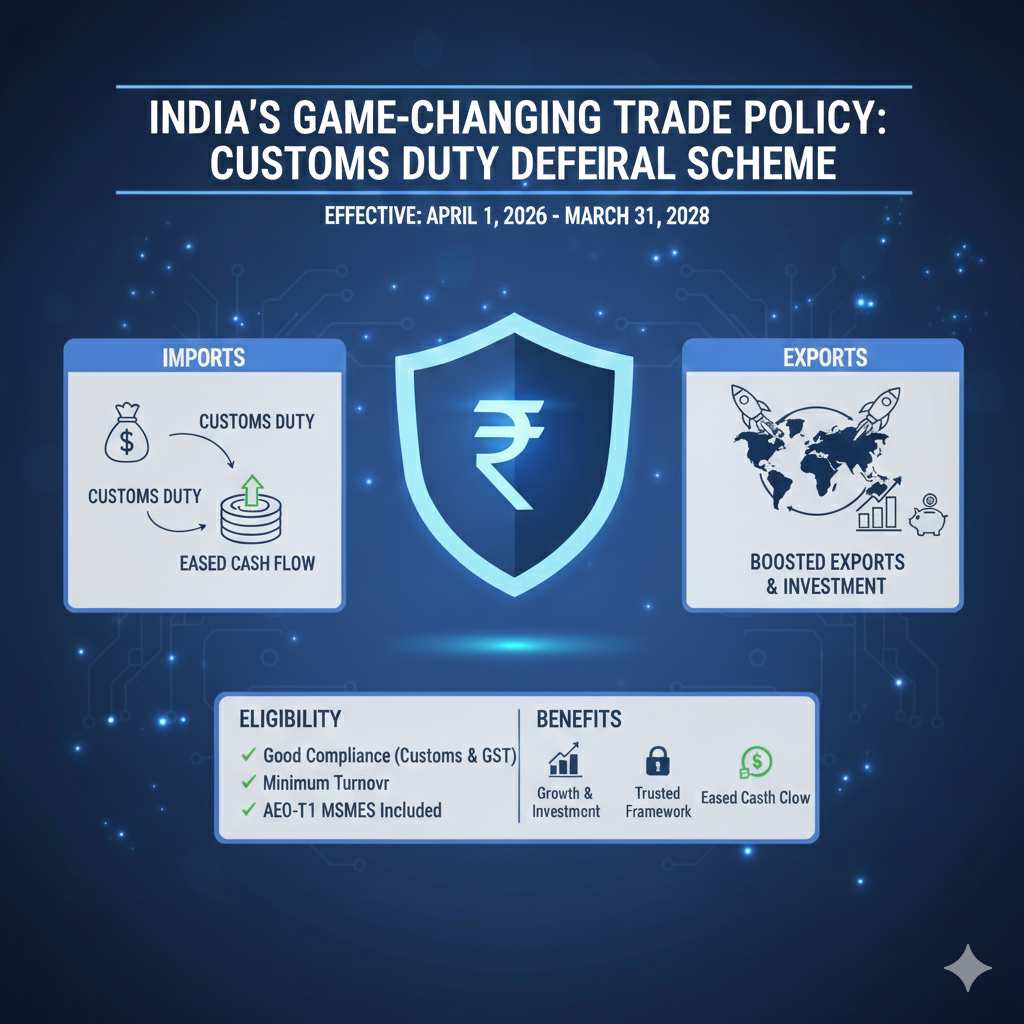
The Central Board of Indirect Taxes and Customs (CBIC) will benefit Indian manufacturers who import goods. Starting from April 1, 2026, eligible manufacturers will be allowed to defer the payment of customs duty on imported goods. This new scheme is designed to ease the pressure on working capital and support the growth of manufacturing and exports in India.

What Is the Customs Duty Deferral Scheme?

The CBIC has introduced a facility allowing certain manufacturers to delay paying customs duties at the time of import. Instead of paying the duty immediately, eligible manufacturers can postpone the payment, which helps improve their cash flow and financial flexibility. This scheme will be effective from April1, 2026, and will continue until March 31, 2028.

This is a welcome move for businesses, especially in a time when managing working capital efficiently can make a big difference to operations and growth.

Who Can Benefit?

  • Not all manufacturers are automatically eligible. The CBIC has set detailed eligibility criteria to ensure that the benefit is extended to compliant and financially strong manufacturers. To qualify, manufacturers must:
  • Have a good compliance record under Customs and GST laws.
  • Meet minimum turnover requirements.
  • Demonstrate financial strength and a strong overall track record.

In addition, existing Authorised Economic Operator (AEO)-T1 entities, including Micro, Small, and Medium Enterprises (MSMEs), can also apply if they meet these conditions.

Background: Government’s Vision and Support

This initiative builds on the announcement made by Finance Minister Nirmala Sitharaman in the Union Budget 2026-27. Previously, duty deferral benefits were only available to higher-tier AEOs — companies that have proven their reliability and compliance in customs procedures.

By extending this benefit to eligible manufacturer-importers, the government aims to

  • Improve liquidity for manufacturers by allowing deferred payment of duties.
  • Encourage increased investment and production.
  • Bring more companies into the trusted Customs framework, enhancing overall compliance and trade efficiency.


Why Is This Important?

For manufacturers, cash flow is critical. Immediate payment of customs duties can sometimes create cash crunches that hinder production or expansion plans. This new scheme offers manufacturers the breathing room to manage their finances better and invest in growth initiatives.

For the economy, this policy is expected to boost India’s manufacturing competitiveness and help increase exports, aligning with the country’s goal to become a global manufacturing hub.

How Can Arrowshipping Help?

At Arrow Shipping, we understand the complexities of customs procedures and compliance requirements. We are here to guide our clients through the application process for this duty deferral scheme and ensure that all eligibility criteria are met.

If you are an importer-manufacturer interested in availing this benefit, our team can assist you with:

  • Understanding the detailed guidelines and application procedures issued by CBIC.
  • Preparing and submitting the required documentation.
  • Ensuring timely compliance to maintain eligibility throughout the scheme’s validity.

Final Thoughts

This customs duty deferral scheme is a positive step towards supporting Indian manufacturers and strengthening the nation’s export potential. As your trusted customs house agent, Arrow Shipping is committed to helping you leverage this opportunity and navigate all regulatory requirements smoothly.

For any questions or assistance related to this scheme or your import shipments, please feel free to contact us. We look forward to helping you enhance your business operations and contribute to India’s growth story.


Import Consultancy Services: Expert Guidance for Smooth and Compliant Imports

Import Consultancy Services: Expert Guidance for Smooth and Compliant Imports

Introduction

Importing goods into India can be a profitable business opportunity—but it also comes with regulatory complexity, documentation requirements, and compliance risks. From tariff classification and duty calculation to licensing and customs clearance, importers must navigate a detailed legal framework.

This is where import consultancy services become essential. Professional import consultants provide strategic guidance, regulatory clarity, and operational support to ensure that goods are imported smoothly and in full compliance with Indian customs laws.

With nearly three decades of experience in customs clearance and logistics, Arrow Shipping provides structured and reliable import consultancy services to businesses across industries.


What Are Import Consultancy Services?

Import consultancy services involve professional advisory and operational support for businesses importing goods into a country. These services help importers understand regulations, plan duty structures, prepare documentation, and ensure compliance with trade laws.

Import consultancy goes beyond transaction-based customs clearance. It includes:

  • Regulatory advisory
     
  • Classification guidance
     
  • Duty structure planning
     
  • Import licensing assistance
     
  • Documentation review
     
  • Risk assessment and compliance support
     

For businesses new to importing—or those handling high-value or complex cargo—professional consultancy significantly reduces risk and delays.


Why Businesses Need Import Consultancy Services

1. Complex Customs Regulations

Indian import regulations involve customs laws, tariff schedules, DGFT guidelines, and product-specific restrictions. Without expert guidance, businesses may face shipment delays or penalties.

2. Accurate HS Code Classification

Incorrect classification of goods under the Harmonized System (HS) code can result in higher duties, reassessment, or fines. Import consultancy services ensure accurate classification.

3. Duty and Tax Optimization

Professional consultants help importers understand applicable customs duties, IGST, and exemptions—allowing better cost planning.

4. Documentation Accuracy

Errors in import documentation can lead to cargo holds or additional scrutiny. Consultants ensure paperwork is complete and compliant before submission.


Arrow Shipping’s Expertise in Import Consultancy Services

Established in 1994, Arrow Shipping has built strong operational knowledge of Indian customs regulations and import procedures.

Licensed Customs House Agent

As a licensed Customs House Agent, Arrow Shipping offers both advisory and execution support for import clearance processes.

Strategic Presence in Major Trade Hubs

With operations in Chennai and Delhi, the company is positioned at key entry points for international cargo, enabling efficient coordination with customs authorities.

Integrated Service Approach

Arrow Shipping combines consultancy with hands-on customs clearance, freight forwarding, and bonded warehousing solutions—providing complete import support under one roof.


Key Components of Import Consultancy Services

Regulatory Advisory

Understanding product-specific import regulations is critical. Arrow Shipping advises clients on:

  • Import restrictions and compliance requirements
     
  • Product-specific approvals
     
  • Documentation standards


Duty Structure Analysis

Import consultancy includes evaluating:

  • Basic customs duty
     
  • IGST implications
     
  • Anti-dumping duties (if applicable)
     
  • Exemptions and benefits
     

This allows businesses to forecast landed costs accurately.


Import Documentation Support

Consultancy services ensure proper preparation and review of:

  • Commercial invoices
     
  • Packing lists
     
  • Bill of Entry
     
  • Certificates of Origin
     
  • Import licenses (if required)
     

Accurate documentation ensures faster customs clearance.


Risk Mitigation and Compliance Planning

Import consultancy services help businesses:

  • Avoid misdeclaration penalties
     
  • Prevent shipment delays
     
  • Ensure adherence to customs audits
     
  • Maintain transparent compliance records
     

Arrow Shipping’s experience minimizes regulatory exposure for importers.


Industries That Benefit from Import Consultancy Services

Import consultancy is valuable across sectors such as:

  • Automotive components
     
  • Electronics and electrical equipment
     
  • Pharmaceuticals and medical devices
     
  • Machinery and industrial equipment
     
  • Retail and consumer goods
     

Each industry has unique regulatory frameworks, and consultancy services ensure proper compliance based on product type.


Import Consultancy vs. Basic Customs Clearance

Many businesses assume customs clearance alone is sufficient. However, consultancy adds strategic value.

Basic Customs Clearance

  • Transaction-based
     
  • Focused on documentation filing
     
  • Reactive process
     

Import Consultancy Services

  • Strategic and advisory-based
     
  • Proactive compliance planning
     
  • Cost and risk optimization
     
  • End-to-end guidance
     

Arrow Shipping combines both consultancy and execution, ensuring complete support from planning to cargo release.


Common Challenges Faced by Importers

Changing Trade Policies

Import policies may change due to government notifications or international trade agreements.

Incorrect Documentation

Incomplete or inaccurate documentation can delay cargo clearance.

Unexpected Duty Costs

Lack of clarity on tariff classification may increase landed cost.

Customs Examination Delays

Improper declaration may trigger additional scrutiny.

Professional import consultancy services help businesses anticipate and prevent these challenges.


Step-by-Step Import Process with Consultancy Support

  1. Pre-Import Advisory
    Review of product classification and regulatory requirements.
     
  2. Documentation Preparation
    Verification of invoices, licenses, and shipping documents.
     
  3. Customs Filing and Coordination
    Filing of Bill of Entry and duty calculation.
     
  4. Cargo Examination and Clearance
    Coordination with customs authorities.
     
  5. Post-Clearance Support
    Compliance record maintenance and advisory for future imports.
     

Arrow Shipping supports clients through each of these stages, ensuring smooth and compliant import operations.


Why Choose Arrow Shipping for Import Consultancy Services?

1. Nearly Three Decades of Experience

Since 1994, Arrow Shipping has managed diverse import scenarios across industries.

2. End-to-End Capability

The company provides consultancy, customs clearance, freight forwarding, and bonded warehousing under one integrated service model.

3. Compliance-Focused Operations

Regulatory accuracy and transparency remain central to every import transaction.

4. Strategic Locations

Operations in Chennai and Delhi enable efficient handling of air and sea imports.


The Future of Import Consultancy in India

With increasing globalization and digitization of customs processes, import consultancy services are becoming more strategic. Businesses require:

  • Faster compliance checks
     
  • Digital documentation support
     
  • Accurate cost forecasting
     
  • Regulatory risk management
     

Experienced consultants will continue to play a key role in helping businesses adapt to evolving trade environments.

Arrow Shipping remains committed to delivering reliable, compliant, and forward-looking import consultancy services.


Conclusion

Importing goods into India requires more than logistics—it demands regulatory clarity, documentation precision, and compliance expertise. Professional import consultancy services ensure that businesses avoid costly delays and maintain smooth trade operations.

With nearly 30 years of experience, licensed customs expertise, and integrated logistics capabilities, Arrow Shipping is a trusted partner for businesses seeking reliable import consultancy solutions in India.


Customs Clearing Agents: The Complete Guide for Importers and Exporters in India

Customs Clearing Agents: The Complete Guide for Importers and Exporters in India

International trade presents tremendous opportunities for businesses, but it also involves strict regulatory procedures, complex documentation, and evolving customs policies. For importers and exporters, ensuring smooth cargo clearance at ports and airports is critical to maintaining supply chain efficiency. This is where customs clearing agents play a vital role.

Customs clearing agents act as licensed intermediaries between businesses and customs authorities. Their expertise ensures that shipments comply with regulations, duties are correctly assessed, and goods are cleared without unnecessary delays.

With nearly three decades of experience, Arrow Shipping has established itself as one of the trusted customs clearing agents supporting businesses with professional, compliant, and efficient clearance services.


What Are Customs Clearing Agents?

Customs clearing agents (also known as Customs House Agents or CHAs) are professionals licensed by Indian Customs to manage clearance procedures on behalf of importers and exporters.

Their primary responsibility is to ensure that goods entering or leaving the country comply with all applicable laws, duties, and documentation requirements.

Core Responsibilities of Customs Clearing Agents

  • Preparation and filing of Bills of Entry and Shipping Bills
     
  • Accurate classification of goods under HS codes
     
  • Duty calculation and tax coordination
     
  • Liaising with customs officials
     
  • Managing cargo examination procedures
     
  • Ensuring compliance with DGFT and customs regulations
     

Without professional customs clearing agents, businesses risk shipment delays, financial penalties, and regulatory complications.


Why Businesses Need Customs Clearing Agents

1. Complex Regulatory Environment

India’s customs framework involves multiple regulations, notifications, and tariff updates. Customs clearing agents stay updated with these changes to ensure compliance.

2. Faster Cargo Clearance

Errors in documentation can result in cargo being held at ports or airports. Professional agents ensure accurate paperwork and proactive coordination to minimize delays.

3. Cost Control

Incorrect duty classification can lead to overpayment or penalties. Experienced customs clearing agents optimize duty structures while ensuring compliance.

4. Reduced Operational Burden

Managing customs independently requires expertise and time. Outsourcing to professionals allows businesses to focus on core operations.


Arrow Shipping: Experienced Customs Clearing Agents Since 1994

Established in 1994, Arrow Shipping has built a strong reputation for delivering reliable customs clearance services across industries.

Licensed Customs House Agent

Arrow Shipping operates as a fully licensed Customs House Agent, authorized to represent clients before Indian Customs authorities.

Strategic Presence in Key Trade Hubs

With offices in Chennai and Delhi, the company handles cargo through major seaports and international airports, ensuring faster processing and local expertise.

Integrated Logistics Services

Beyond customs clearance, Arrow Shipping offers freight forwarding and bonded warehousing, providing clients with a seamless logistics solution.


Import Clearance Services by Customs Clearing Agents

Import clearance is one of the most critical aspects of international trade.

Import Services Include:

  • Filing Bill of Entry
     
  • Classification and valuation of goods
     
  • Coordination for customs inspection
     
  • Duty payment processing
     
  • Obtaining Out-of-Charge clearance
     

Arrow Shipping ensures smooth import clearance while minimizing delays and compliance risks.


Export Clearance Services by Customs Clearing Agents

Export procedures require precision and adherence to regulatory guidelines.

Export Services Include:

  • Preparation of Shipping Bills
     
  • Export documentation verification
     
  • Compliance with export schemes and incentives
     
  • Coordination with port and airport authorities
     

Professional customs clearing agents ensure export consignments depart on schedule without regulatory issues.


Air and Sea Cargo Clearance Expertise

Air Cargo Clearance

Air shipments often involve urgent and high-value goods. Customs clearing agents coordinate quick documentation processing and airport customs procedures.

Sea Cargo Clearance

Sea freight shipments require careful coordination at ports, especially for containerized cargo. Arrow Shipping manages both FCL and LCL clearances efficiently.


Documentation Handled by Customs Clearing Agents

Accurate documentation is the foundation of customs clearance.

Common documents include:

  • Commercial Invoice
     
  • Packing List
     
  • Bill of Entry
     
  • Shipping Bill
     
  • Bill of Lading / Air Waybill
     
  • Certificate of Origin
     
  • Import Export Code (IEC)
     

Arrow Shipping’s experienced team ensures complete and compliant documentation for every shipment.


Industries Served by Customs Clearing Agents

Customs clearing agents support a wide range of industries, including:

  • Automotive and engineering goods
     
  • Pharmaceuticals and medical equipment
     
  • Electronics and consumer products
     
  • Textile and apparel exports
     
  • Industrial machinery and capital goods
     

Arrow Shipping tailors its clearance solutions to meet industry-specific compliance requirements.


Common Challenges in Customs Clearance

Documentation Errors

Minor discrepancies can cause major delays. Professional agents prevent errors through thorough verification.

Classification Disputes

Incorrect HS code classification can lead to reassessment and penalties. Experienced agents ensure accurate classification.

Regulatory Updates

Frequent changes in customs policies require constant monitoring and adaptation.

Port Delays

Efficient coordination with port authorities helps reduce demurrage and detention charges.


How to Choose the Right Customs Clearing Agents in India

Selecting the right partner directly impacts your supply chain efficiency.

Key Factors to Consider:

  • Years of industry experience
     
  • Licensed and compliant operations
     
  • Strong presence in major ports and airports
     
  • Integrated logistics capabilities
     
  • Transparent communication
     

With nearly 30 years of experience, Arrow Shipping fulfills these critical requirements.


The Future of Customs Clearing Services in India

With increasing trade volumes and digitization of customs processes, the role of customs clearing agents is becoming more strategic. Businesses now demand faster clearances, digital documentation, and integrated logistics support.

Arrow Shipping continues to evolve with modern customs systems while maintaining a compliance-driven approach.


Conclusion

Customs clearing agents are essential partners in international trade, ensuring that import and export shipments comply with regulations and move efficiently through ports and airports. Their expertise minimizes delays, reduces risks, and optimizes costs.

With a strong presence in Chennai and Delhi, decades of experience, and integrated logistics services, Arrow Shipping stands out as a trusted provider of professional customs clearing solutions in India.

.


Freight Forwarding: The Complete Guide for Importers and Exporters in India

In today’s interconnected global economy, businesses depend heavily on efficient logistics to stay competitive. Whether importing raw materials or exporting finished goods, companies need reliable systems to move cargo across international borders. This is where freight forwarding plays a crucial role.

Freight forwarding is far more than booking cargo space. It involves coordination, documentation, compliance, route planning, customs clearance, and risk management. Choosing the right freight forwarding partner can significantly impact your supply chain efficiency, cost control, and delivery timelines.

With nearly three decades of industry experience, Arrow Shipping delivers dependable freight forwarding solutions designed to simplify global trade operations.

What Is Freight Forwarding?

Freight forwarding is the process of organizing and managing the shipment of goods from one location to another via air, sea, or land. A freight forwarder acts as an intermediary between the shipper and transportation services, ensuring cargo moves smoothly through the logistics chain.

Core Functions of Freight Forwarding

  • Arranging cargo transportation
     
  • Booking space with airlines or shipping lines
     
  • Preparing shipping documentation
     
  • Coordinating customs clearance
     
  • Managing warehousing and cargo handling
     
  • Ensuring timely delivery
     

Freight forwarders combine logistics planning with regulatory expertise, making them essential partners for businesses engaged in international trade.

Why Freight Forwarding Is Essential for Global Trade

1. Simplifies Complex Logistics

International shipping involves multiple stakeholders — carriers, customs authorities, ports, warehouses, and transporters. Freight forwarding integrates these elements into a coordinated system.

2. Ensures Regulatory Compliance

Customs regulations, tariffs, and documentation requirements vary by country. Professional freight forwarders stay updated with trade laws to avoid penalties and delays.

3. Reduces Operational Risks

Freight forwarders anticipate potential issues such as port congestion, documentation discrepancies, or regulatory changes, helping businesses mitigate disruptions.

4. Optimizes Cost and Transit Time

By selecting efficient routes and reliable carriers, freight forwarding companies help control logistics expenses while meeting delivery schedules.

Types of Freight Forwarding Services

Air Freight Forwarding

Air freight is ideal for time-sensitive or high-value shipments.

Benefits include:

  • Faster transit times
     
  • Secure cargo handling
     
  • Global connectivity
     
  • Suitable for electronics, pharmaceuticals, and urgent goods
     

Arrow Shipping coordinates air freight operations with precise documentation and airport customs clearance support.

Sea Freight Forwarding

Sea freight remains the most economical solution for large-volume and bulk shipments.

Sea freight services include:

  • Full Container Load (FCL)
     
  • Less than Container Load (LCL)
     
  • Import and export handling
     
  • Container tracking and coordination
     

Arrow Shipping manages sea freight forwarding through major ports, ensuring compliance and smooth cargo movement.

Freight Forwarding and Customs Clearance: An Integrated Approach

Freight forwarding and customs clearance are closely interconnected. Errors in documentation or regulatory compliance can halt cargo movement.

As a licensed Customs House Agent, Arrow Shipping integrates freight forwarding with customs clearance services, including:

  • Filing Bills of Entry
     
  • Shipping Bill processing
     
  • Duty assessment and coordination
     
  • Cargo examination management
     

This integrated approach ensures faster clearances and seamless cargo transitions.

Key Documents Involved in Freight Forwarding

Accurate documentation is the backbone of successful freight forwarding.

Common documents include:

  • Commercial Invoice
     
  • Packing List
     
  • Bill of Lading (Sea Freight)
     
  • Air Waybill (Air Freight)
     
  • Shipping Bill
     
  • Bill of Entry
     
  • Certificate of Origin
     

Arrow Shipping’s experienced team ensures every document is prepared and verified with precision.

Industries That Depend on Freight Forwarding

Freight forwarding supports diverse industries in India, including:

  • Automotive and engineering
     
  • Pharmaceuticals and healthcare
     
  • Electronics and consumer goods
     
  • Textile and apparel
     
  • Industrial machinery
     

Each industry has unique compliance and handling requirements. Arrow Shipping tailors freight forwarding solutions based on cargo type and trade regulations.

Challenges in Freight Forwarding (and How Experts Solve Them)

Port Congestion

Efficient scheduling and proactive coordination reduce delays caused by heavy port traffic.

Changing Trade Policies

Frequent updates in customs regulations require constant monitoring and compliance management.

Documentation Errors

Professional freight forwarders conduct thorough document verification to prevent costly mistakes.

Cargo Damage or Loss

Freight forwarding includes coordination of secure packaging, insurance, and proper handling procedures.

Why Choose Arrow Shipping for Freight Forwarding?

1. Established Industry Experience

Since 1994, Arrow Shipping has handled diverse cargo types and regulatory scenarios.

2. Strategic Operational Presence

With offices in Chennai and Delhi, the company operates from key trade gateways in India.

3. End-to-End Logistics Capability

From freight forwarding to customs clearance and bonded warehousing, Arrow Shipping offers comprehensive solutions under one roof.

4. Compliance-Focused Operations

The company prioritizes adherence to customs regulations, ensuring smooth and lawful cargo movement.

How to Choose the Right Freight Forwarding Partner

Selecting a freight forwarder is a strategic decision that affects supply chain performance.

Consider the Following:

  • Years of experience in international trade
     
  • Knowledge of customs regulations
     
  • Range of services offered
     
  • Presence in major ports and airports
     
  • Transparent communication and tracking
     

Arrow Shipping meets these criteria, providing reliable freight forwarding services designed for efficiency and compliance.

The Future of Freight Forwarding in India

India’s logistics sector is evolving rapidly with digitized customs systems, improved infrastructure, and expanding global trade networks. Businesses now expect:

  • Faster documentation processing
     
  • Real-time shipment updates
     
  • Integrated logistics solutions
     
  • Streamlined compliance procedures
     

Freight forwarding companies that adapt to these trends will play a central role in India’s growing trade ecosystem.

Arrow Shipping continues to evolve with modern logistics practices while maintaining its strong compliance foundation.

Conclusion

Freight forwarding is the backbone of international trade, connecting businesses to global markets through efficient planning, coordination, and regulatory expertise. From air and sea freight to customs clearance and documentation, a professional freight forwarding partner ensures cargo moves smoothly and cost-effectively.

With nearly three decades of experience and operations in Chennai and Delhi, Arrow Shipping stands as a trusted provider of freight forwarding services in India.

Looking for reliable and compliant freight forwarding services for your import and export operations?

???? Contact Arrow Shipping today to streamline your global cargo movement with a trusted logistics partner.


Chennai Logistics Company: Reliable End-to-End Logistics Solutions for Global Trade

Chennai is one of India’s most important trade gateways, connecting businesses to global markets through its major seaport, international airport, and industrial corridors. For importers and exporters, choosing the right Chennai logistics company is critical for ensuring timely cargo movement, regulatory compliance, and cost efficiency.

A professional logistics partner does more than transport goods. It coordinates customs clearance, freight forwarding, warehousing, documentation, and final delivery — all while navigating India’s complex trade regulations.

With nearly three decades of industry expertise, Arrow Shipping has established itself as a dependable Chennai logistics company, delivering integrated logistics and customs solutions tailored to business needs.

Why Chennai Is a Strategic Logistics Hub in India

Chennai plays a vital role in India’s international trade ecosystem.

Key Advantages of Chennai as a Logistics Hub

  • Major seaport handling containerized and bulk cargo
     
  • International airport supporting air freight operations
     
  • Strong industrial base (automotive, electronics, manufacturing)
     
  • Excellent connectivity to South India’s manufacturing clusters
     

For businesses operating in South India, partnering with a Chennai logistics company ensures strategic access to global shipping routes.

What Does a Chennai Logistics Company Do?

A professional logistics company in Chennai typically offers:

  • Import and export customs clearance
     
  • Air freight forwarding
     
  • Sea freight forwarding
     
  • Cargo coordination and documentation
     
  • Warehousing and bonded storage
     
  • Supply chain management
     

Arrow Shipping combines all these services under one roof, simplifying logistics management for clients.

Arrow Shipping: A Trusted Chennai Logistics Company Since 1994

Established in 1994, Arrow Shipping has built a strong reputation in the logistics and customs sector.

Licensed Customs House Agent

As a licensed Customs House Agent, Arrow Shipping ensures full regulatory compliance while handling import and export clearances.

End-to-End Logistics Expertise

Unlike companies that specialize in only one segment, Arrow Shipping integrates customs clearance with freight forwarding and warehousing services.

Client-Focused Approach

The company’s operational experience allows it to provide customized solutions based on cargo type, industry requirements, and shipment urgency.

Import Customs Clearance in Chennai

Customs clearance is one of the most critical components of international trade.

Import Services Include:

  • Filing of Bill of Entry
     
  • Duty calculation and assessment
     
  • Coordination for customs examination
     
  • Clearance and release of cargo
     

Arrow Shipping ensures smooth import clearance at Chennai’s ports and airport, reducing delays and demurrage costs.

Export Customs Clearance in Chennai

Exporters require accurate documentation and compliance with export regulations.

Export Clearance Services Include:

  • Shipping Bill preparation
     
  • Export documentation verification
     
  • Coordination with customs authorities
     
  • Timely cargo processing for shipment
     

Arrow Shipping helps Chennai-based exporters move goods efficiently to international markets.

Freight Forwarding Services by a Chennai Logistics Company

Freight forwarding plays a key role in global cargo movement.

Air Freight Forwarding

Air freight is ideal for urgent and high-value shipments. Arrow Shipping coordinates airline bookings, documentation, and airport customs clearance for seamless air cargo movement.

Sea Freight Forwarding

Sea freight is cost-effective for bulk shipments and containerized cargo. Arrow Shipping manages FCL and LCL shipments, port handling, and container coordination through Chennai’s seaport.

Bonded Warehousing and Storage Solutions

For importers seeking financial flexibility, bonded warehousing offers a strategic advantage.

Benefits of Bonded Warehousing

  • Deferred customs duty payment
     
  • Secure storage under customs supervision
     
  • Partial cargo clearance based on demand
     
  • Re-export flexibility
     

Arrow Shipping provides bonded warehousing support as part of its comprehensive logistics solutions in Chennai.

Industries Served by Chennai Logistics Companies

Chennai’s industrial ecosystem includes diverse sectors that depend on efficient logistics.

Key Industries Include:

  • Automotive and auto components
     
  • Electronics and electrical equipment
     
  • Pharmaceuticals and healthcare
     
  • Textile and apparel manufacturing
     
  • Heavy engineering and machinery
     

Arrow Shipping supports these industries with customized logistics and customs solutions.

Challenges Businesses Face Without a Professional Logistics Partner

Regulatory Complexity

Indian customs regulations can be detailed and dynamic. Without expert guidance, businesses risk delays and penalties.

Documentation Errors

Incorrect paperwork can lead to cargo holds and financial losses.

Port Congestion

Efficient coordination is required to avoid storage charges and shipment delays.

Multi-Party Coordination

Managing carriers, customs officials, warehouses, and transporters can be overwhelming.

A reliable Chennai logistics company like Arrow Shipping addresses these challenges proactively.

How to Choose the Right Chennai Logistics Company

Selecting the right logistics partner directly impacts supply chain performance.

Important Criteria:

  • Years of industry experience
     
  • Licensed and compliant operations
     
  • Presence at major ports and airports
     
  • End-to-end service capability
     
  • Transparent communication
     

With operations in Chennai and Delhi and nearly 30 years of expertise, Arrow Shipping meets these critical requirements.

Why Businesses Prefer Arrow Shipping in Chennai

1. Long-Standing Industry Experience

Established in 1994, the company brings deep knowledge of customs procedures and logistics operations.

2. Integrated Service Model

Clients benefit from having customs clearance, freight forwarding, and warehousing managed by one trusted partner.

3. Strong Local Expertise

Being an established Chennai logistics company, Arrow Shipping understands local port operations, documentation processes, and compliance requirements.

4. Reliable and Efficient Operations

The company focuses on minimizing delays, ensuring compliance, and optimizing supply chain efficiency.

The Future of Logistics in Chennai

With increasing globalization and trade volumes, Chennai continues to strengthen its position as a major logistics hub in India. Digitization of customs processes, infrastructure development, and growing industrial output are shaping the future of logistics in the region.

Companies that partner with experienced logistics providers will gain a competitive advantage in terms of speed, compliance, and operational efficiency.

Arrow Shipping remains committed to adapting to evolving trade practices while maintaining high standards of service.

Conclusion

Choosing the right Chennai logistics company is essential for businesses involved in import and export operations. From customs clearance to freight forwarding and bonded warehousing, a reliable logistics partner ensures smooth cargo movement and regulatory compliance.

With nearly three decades of experience, strong operational presence in Chennai, and comprehensive end-to-end logistics capabilities, Arrow Shipping stands out as a trusted logistics partner for businesses across industries.

Looking for a dependable Chennai logistics company to handle your import and export operations?

 Contact Arrow Shipping today and streamline your logistics with a trusted partner committed to efficiency, compliance, and long-term reliability.


CBIC Introduces Automated Customs Clearance


CBIC Introduces Major Automation in Import & Export Clearance: Circular No. 06/2026 Explained

The Central Board of Indirect Taxes and Customs (CBIC) has issued Circular No. 06/2026-Customs dated 1st February 2026, marking a significant step towards fully automated, contactless, and faster customs clearance for both imports and exports .

This circular introduces three key automation measures aimed at improving transparency, reducing human interface, and enhancing ease of doing business for trade stakeholders.


Background: Why This Circular Matters

In line with the Government of India’s focus on trade facilitation, predictability, and trust-based compliance, CBIC has been progressively leveraging digital systems to:

  • Minimise physical interaction with Customs
  • Ensure uniform assessment practices
  • Reduce clearance timelines
  • Improve monitoring and supervision through system-based controls

Building on feedback from trade and field formations, the Board has now rolled out advanced automation features in both import and export processes.


Key Highlights of Circular No. 06/2026-Customs

1. Auto Goods Registration & Auto Out of Charge (OOC) for Imports

CBIC has expanded the scope of system-driven goods registration and clearance for imports.

Auto Goods Registration

Goods registration will now be automatically carried out by the Customs system (without manual web-based registration) for:

  • AEO T2 and AEO T3 importers
  • Eligible Manufacturer Importers notified under Notification No. 12/2026-Customs (NT)
  • Importers with longstanding supply chains
  • Importers availing Direct Port Delivery (DPD) facility

This removes a critical manual step and significantly reduces dwell time at ports.

Auto Out of Charge (OOC)

The Auto OOC facility is now extended to all importers, subject to:

  • Payment of applicable customs duty (if any)
  • No pending compliance requirements

This expands the earlier benefit that was limited primarily to AEO T2/T3 entities and complements the existing automated OOC mechanism introduced earlier.


2. Auto Goods Registration for Sealed Export Cargo

For exports, CBIC has digitised the goods registration process to eliminate delays caused by physical verification.

Online Goods Registration

  • Exporters will now be able to register goods online, without approaching Customs officers after cargo arrival in the customs area.
  • This reduces physical interface and speeds up export processing.

Pilot Project for E-Seal-Based Registration

  • A pilot project for e-seal-based auto goods registration will be launched at Nhava Sheva (JNPA), Mumbai.
  • Based on pilot results, the facility will be rolled out to other ports in a phased manner, subject to installation of e-seal readers.

3. Auto Let Export Order (Auto LEO)

Once goods are registered, Auto Let Export Order (LEO) will be granted automatically based on risk-based assessment, provided the Shipping Bill meets the following criteria:

  • Not selected for examination or assessment
  • No requirement of any PGA-related NOC
  • Export duty or cess (if applicable) has been paid

This is a major step toward paperless and time-bound export clearances.


Risk-Based Controls Remain in Place

While automation has been expanded, CBIC has clarified that:

  • Auto OOC and Auto LEO are risk-based
  • Customs officers retain the authority to invoke “HOLD” in the system based on intelligence or risk parameters

This ensures facilitation without compromising enforcement.


Implementation & Compliance

  • Zonal Customs Heads have been instructed to ensure strict implementation
  • Integration of e-seal readers with Customs systems is mandatory for export automation
  • DG Systems will issue a detailed advisory for online goods registration procedures
  • Trade Notices and Public Notices will be issued to ensure awareness among stakeholders

What This Means for Importers & Exporters

  • Faster cargo clearance
  • Reduced port dwell time
  • Minimal human interface
  • Lower transaction costs
  • Improved predictability in logistics planning

For compliant importers and exporters, especially those with stable supply chains, this circular represents a significant operational advantage.


How Arrow Shipping Can Help

At Arrow Shipping, we help importers and exporters:

  • Align with new Customs automation requirements
  • Optimise clearance under Auto OOC and Auto LEO
  • Leverage AEO, DPD, and facilitation benefits
  • Ensure end-to-end customs and logistics compliance

If you want to understand how this circular impacts your imports or exports, feel free to reach out to our team.

CHA Agent: Everything Importers and Exporters Need to Know

CHA Agent: Everything Importers and Exporters Need to Know


International trade in India is governed by complex customs laws, regulatory procedures, and documentation requirements. For businesses involved in import and export, navigating these processes without expert support can lead to delays, penalties, and increased costs. This is where a CHA agent becomes indispensable.

A CHA agent, also known as a Customs House Agent, acts as a licensed representative who handles customs clearance procedures on behalf of importers and exporters. From documentation and duty assessment to coordination with customs authorities, a professional CHA agent ensures cargo moves smoothly across borders.

With nearly three decades of experience, Arrow Shipping has built a reputation as a reliable CHA agent, supporting businesses with compliant, efficient, and transparent customs solutions.


What Is a CHA Agent?

A CHA agent is a professional authorized by Indian Customs to carry out customs clearance activities for importers and exporters. The role of a CHA agent is governed by customs regulations and requires in-depth knowledge of customs laws, tariff structures, and trade compliance.

CHA agents act as a critical link between:

  • Importers and exporters
     
  • Customs authorities
     
  • Ports and airports
     
  • Freight forwarders and logistics providers
     

Their expertise ensures that goods are cleared legally, accurately, and without unnecessary delays.


Role and Responsibilities of a CHA Agent

A CHA agent’s responsibilities go far beyond document submission. Their role includes end-to-end customs coordination.

Key Responsibilities

  • Preparation and filing of Bills of Entry and Shipping Bills
     
  • Classification of goods under correct HS codes
     
  • Calculation and payment of customs duties and taxes
     
  • Coordination for customs examination of cargo
     
  • Liaison with customs officers and port authorities
     
  • Ensuring compliance with import/export regulations
     

By managing these critical tasks, a CHA agent protects businesses from regulatory risks and operational disruptions.


Why Businesses Need a Professional CHA Agent

1. Compliance With Customs Regulations

Indian customs laws are detailed and frequently updated. A professional CHA agent stays informed about regulatory changes, ensuring shipments remain compliant at all times.

2. Faster Customs Clearance

Accurate documentation and proactive coordination significantly reduce clearance time, helping businesses avoid demurrage and detention charges.

3. Cost Control and Risk Reduction

Incorrect classification or documentation errors can lead to penalties and financial losses. A CHA agent ensures correct duty assessment and minimizes compliance risks.

4. Single Point of Coordination

A CHA agent acts as a single interface between multiple stakeholders, simplifying communication and operational management.


Arrow Shipping as a Trusted CHA Agent Since 1994

With decades of industry experience, Arrow Shipping has consistently delivered reliable customs clearance services across industries.

Licensed and Experienced Operations

As a licensed Customs House Agent, Arrow Shipping is authorized to represent clients before Indian Customs, ensuring transparency and accountability in every transaction.

Strategic Presence in Trade Hubs

With operations in Chennai and Delhi, Arrow Shipping is strategically positioned to manage cargo through major ports and international airports, enabling faster and smoother clearances.


Import Customs Clearance Services by a CHA Agent

Import clearance is one of the most critical responsibilities of a CHA agent.

Import Clearance Activities Include:

  • Filing Bill of Entry
     
  • Duty calculation and payment
     
  • Coordination for cargo examination
     
  • Customs release and out-of-charge processing
     

Arrow Shipping ensures that import consignments are cleared efficiently while adhering to all regulatory requirements.


Export Customs Clearance Services by a CHA Agent

Export clearance requires precise documentation and compliance with export regulations.

Export Clearance Activities Include:

  • Preparation and filing of Shipping Bills
     
  • Verification of export documentation
     
  • Compliance with export incentive schemes
     
  • Coordination with customs and port authorities
     

Arrow Shipping supports exporters by ensuring timely clearance and shipment departures.


CHA Agent Support for Air and Sea Cargo

Air Cargo Clearance

Air shipments often involve time-sensitive and high-value goods. A CHA agent ensures quick documentation processing and coordination with airport customs authorities.

Sea Cargo Clearance

Sea cargo clearance involves handling containerized and bulk shipments through ports. Arrow Shipping’s CHA services cover FCL and LCL shipments, ensuring smooth port operations and container release.


Industries Served by CHA Agents

CHA agents support a wide range of industries involved in international trade, including:

  • Manufacturing and engineering goods
     
  • Pharmaceuticals and medical equipment
     
  • Automotive components
     
  • Electronics and consumer goods
     
  • Textiles and apparel
     

Arrow Shipping customizes its CHA services based on industry-specific compliance and cargo requirements.


Documents Handled by a CHA Agent

Customs clearance depends heavily on accurate documentation. A CHA agent manages and verifies documents such as:

  • Commercial Invoice
     
  • Packing List
     
  • Bill of Entry / Shipping Bill
     
  • Bill of Lading / Air Waybill
     
  • Certificate of Origin
     
  • Import Export Code (IEC)
     

Errors in documentation can cause costly delays. Arrow Shipping’s experienced team ensures precision at every stage.


 Common Challenges in Customs Clearance (and How CHA Agents Solve Them)

Regulatory Changes

CHA agents continuously track updates in customs notifications, tariff changes, and trade policies.

Cargo Examination Delays

Proactive coordination with customs authorities helps reduce examination-related delays.

Classification Disputes

Correct HS code classification avoids disputes, penalties, and reassessments.

Duty and Tax Issues

CHA agents ensure accurate duty calculation and timely payment, preventing clearance bottlenecks.


How to Choose the Right CHA Agent in India

Selecting the right CHA agent is crucial for long-term trade success.

Important Factors to Consider

  • Proven experience and track record
     
  • Licensed and compliant operations
     
  • Presence in key ports and airports
     
  • Ability to handle both imports and exports
     
  • Transparent communication and reporting
     

With its long-standing reputation and comprehensive services, Arrow Shipping meets all these criteria.


The Future of CHA Services in India

With increasing digitization of customs processes and growth in global trade, the role of a CHA agent is becoming more strategic. Businesses now expect faster clearances, digital documentation, and integrated logistics support.

Arrow Shipping continues to evolve with these changes, combining traditional expertise with modern customs practices.


Conclusion

A CHA agent plays a vital role in facilitating smooth, compliant, and efficient international trade. From handling complex documentation to coordinating with customs authorities, a professional CHA agent safeguards businesses from delays and regulatory risks.

With nearly 30 years of experience, strategic operations in Chennai and Delhi, and deep expertise in air and sea customs clearance, Arrow Shipping stands out as a trusted CHA agent in India.

Looking for a reliable CHA agent to manage your import and export customs clearance?

Contact Arrow Shipping today and partner with an experienced Customs House Agent committed to efficiency, compliance, and customer satisfaction.


Custom Bonded Warehousing: A Strategic Solution for Importers in India


In international trade, managing inventory efficiently while complying with customs regulations is a constant challenge for importers. Paying customs duties immediately upon import can strain cash flow, especially for high-value or bulk consignments. This is where custom bonded warehousing becomes a powerful strategic tool.

Custom bonded warehousing allows importers to store goods under customs control without paying import duties until the goods are cleared for domestic consumption. For businesses seeking flexibility, cost optimization, and compliance, bonded warehousing is an essential component of modern supply chains.

With decades of experience in customs operations, Arrow Shipping provides reliable custom bonded warehousing solutions tailored to the needs of importers across industries.


What Is Custom Bonded Warehousing?

Custom bonded warehousing refers to a facility licensed by Indian Customs where imported goods can be stored without immediate payment of customs duty. The goods remain under customs bond and supervision until they are either:

  • Cleared for home consumption (upon duty payment), or
     
  • Re-exported without duty payment
     

This system provides importers with greater control over inventory and financial planning.


How Custom Bonded Warehousing Works

The bonded warehousing process typically involves the following steps:

  1. Import of Goods
    Goods arrive at an Indian port or airport and are assessed by customs.
     
  2. Bonded Warehouse Transfer
    Instead of paying duties immediately, goods are moved to a licensed bonded warehouse under customs bond.
     
  3. Storage Under Customs Control
    Goods remain stored securely, with customs oversight and documentation.
     
  4. Partial or Full Clearance
    Importers can clear goods partially or fully by paying applicable duties only on the quantity released.
     
  5. Final Distribution or Re-export
    Cleared goods enter the domestic market, or remaining goods may be re-exported.
     

Arrow Shipping manages this entire process, ensuring compliance at every stage.


Why Custom Bonded Warehousing Is Important for Importers

1. Deferred Customs Duty Payment

One of the biggest advantages of custom bonded warehousing is the ability to defer duty payment. Importers pay customs duties only when goods are cleared for sale or use, improving cash flow management.

2. Improved Inventory Control

Bonded warehouses allow businesses to store goods closer to the market while releasing inventory based on demand, reducing excess stock holding.

3. Cost Optimization

By avoiding immediate duty payment and reducing demurrage at ports, bonded warehousing helps lower overall logistics costs.

4. Re-export Flexibility

If goods are re-exported directly from the bonded warehouse, customs duty may not be applicable, making it ideal for trading and redistribution businesses.


Arrow Shipping’s Custom Bonded Warehousing Solutions

With extensive experience as a licensed Customs House Agent, Arrow Shipping offers integrated bonded warehousing services that align with Indian customs regulations.

Licensed and Compliant Operations

Arrow Shipping ensures all bonded warehousing activities comply with customs laws, documentation requirements, and audit standards.

Strategic Locations

Operating from Chennai and Delhi, Arrow Shipping supports bonded storage near major ports and airports, reducing transit time and handling costs.

End-to-End Service Management

From customs bonding to clearance and final delivery, Arrow Shipping acts as a single point of coordination, minimizing operational complexity for clients.


Types of Goods Suitable for Custom Bonded Warehousing

Custom bonded warehousing is widely used across industries, including:

  • Electronics and high-value equipment
     
  • Pharmaceuticals and medical devices
     
  • Automotive components and spare parts
     
  • Industrial machinery
     
  • Consumer goods and retail products
     

Arrow Shipping customizes bonded storage solutions based on commodity type and regulatory requirements.


 Custom Bonded Warehousing vs. Regular Warehousing

Understanding the difference helps businesses choose the right storage solution.

Custom Bonded Warehousing

  • Customs duty payment deferred
     
  • Goods under customs supervision
     
  • Suitable for imports and re-exports
     
  • Ideal for cash flow optimization
     

Regular Warehousing

  • Duties paid upfront
     
  • Goods free for immediate sale
     
  • No customs control
     
  • Suitable for domestic inventory
     

For importers handling large volumes or high-value cargo, bonded warehousing offers a clear financial advantage.


Documentation Involved in Custom Bonded Warehousing

Accurate documentation is critical for bonded warehouse operations. Common documents include:

  • Bill of Entry for Warehousing
     
  • Bond execution documents
     
  • Inventory and stock registers
     
  • Ex-bond Bill of Entry (for clearance)
     
  • Re-export documentation (if applicable)
     

Arrow Shipping’s experienced team ensures error-free documentation and smooth customs coordination.


Common Challenges in Bonded Warehousing (and How Experts Handle Them)

Regulatory Compliance

Bonded warehouses are subject to audits and inspections. Experienced agents ensure strict compliance to avoid penalties.

Inventory Tracking

Precise stock management is essential. Arrow Shipping maintains accurate records aligned with customs requirements.

Timely Clearance

Delays in ex-bond clearance can disrupt supply chains. Professional handling ensures timely duty payment and release.


Industries Benefiting from Custom Bonded Warehousing

Custom bonded warehousing is particularly valuable for:

  • Importers with seasonal demand
     
  • Distributors handling international brands
     
  • Businesses involved in re-export or transshipment
     
  • Companies importing capital goods or machinery
     

Arrow Shipping supports these businesses with compliant, flexible warehousing solutions.


The Role of a Customs House Agent in Bonded Warehousing

A licensed Customs House Agent plays a crucial role in bonded warehousing by:

  • Executing customs bonds
     
  • Liaising with customs authorities
     
  • Managing audits and compliance
     
  • Handling ex-bond and re-export clearances
     

Arrow Shipping’s long-standing relationship with customs authorities ensures smooth bonded operations for clients.


The Future of Custom Bonded Warehousing in India

With growing imports, evolving trade policies, and increased focus on supply chain efficiency, bonded warehousing is becoming increasingly important in India. Digitized customs systems and policy reforms are making bonded storage more accessible and efficient for businesses.

Arrow Shipping continues to adapt to these changes, offering modern, compliant bonded warehousing solutions aligned with industry needs.


Conclusion

Custom bonded warehousing is a strategic advantage for importers seeking flexibility, compliance, and financial efficiency. By deferring duty payments, optimizing inventory, and enabling re-export options, bonded warehouses play a vital role in international trade operations.

With decades of customs expertise, strategic locations in Chennai and Delhi, and end-to-end service capabilities, Arrow Shipping is a trusted partner for custom bonded warehousing in India.

Looking for a reliable custom bonded warehousing solution to optimize your import operations?

Contact Arrow Shipping today to store, manage, and clear your imported goods with full customs compliance and operational efficiency.


Freight Forwarding Services: The Backbone of Global Trade


Introduction

In an increasingly interconnected global economy, the movement of goods across borders has become more complex than ever. From coordinating multiple transport modes to complying with international trade regulations, businesses face numerous challenges in global logistics. This is where freight forwarding plays a vital role.

Freight forwarding is not just about transportation-it is about planning, coordination, documentation, compliance, and risk management. For importers and exporters in India, working with an experienced freight forwarder ensures cargo moves smoothly, cost-effectively, and on time.

With decades of industry expertise, Arrow Shipping provides reliable freight forwarding solutions tailored to the needs of businesses engaged in international trade.


What Is Freight Forwarding?

Freight forwarding is the process of organizing and managing the transportation of goods on behalf of shippers. Freight forwarders act as intermediaries between exporters, importers, carriers, customs authorities, and other logistics partners.

A freight forwarder does not typically move cargo themselves; instead, they design the most efficient logistics solution by coordinating:

  • Air and sea transportation
     
  • Customs clearance
     
  • Documentation and compliance
     
  • Warehousing and cargo handling
     
  • Final delivery coordination
     

By managing these elements, freight forwarding companies ensure seamless cargo movement across international borders.


Why Freight Forwarding Is Critical for Importers and Exporters

Global trade involves multiple stakeholders, regulations, and logistical touchpoints. Freight forwarding simplifies this complexity.

1. End-to-End Logistics Coordination

Freight forwarding connects every stage of the supply chain-from the exporter’s location to the importer’s warehouse-ensuring smooth transitions between transport modes.

2. Regulatory and Documentation Expertise

International shipping requires precise documentation such as invoices, packing lists, bills of lading, and shipping bills. Freight forwarders ensure accuracy and compliance, reducing the risk of delays and penalties.

3. Cost and Time Efficiency

By selecting optimal routes, carriers, and shipment methods, freight forwarders help businesses control costs while meeting delivery timelines.

4. Risk Management

From cargo insurance coordination to contingency planning, freight forwarding minimizes risks associated with damage, loss, or shipment delays.


Arrow Shipping’s Expertise in Freight Forwarding

Established in 1994, Arrow Shipping brings nearly three decades of operational knowledge to freight forwarding services in India.

Strategic Locations

With operations in Chennai and Delhi-two of India’s most important trade and logistics hubs- Arrow Shipping ensures faster access to seaports, airports, and customs authorities.

Integrated Logistics Approach

Unlike standalone transport providers, Arrow Shipping combines freight forwarding with customs clearance and logistics coordination, offering clients a single, reliable point of contact.


Air Freight Forwarding Services

Air freight is the preferred mode for time-sensitive, high-value, and urgent cargo.

Key Features of Air Freight Forwarding

  • Faster transit times
     
  • Secure handling of sensitive cargo
     
  • Global connectivity through major airlines
     
  • Ideal for pharmaceuticals, electronics, and perishables
     

Arrow Shipping manages air freight forwarding from pickup to final delivery, including customs clearance and airline coordination.


Sea Freight Forwarding Services

Sea freight remains the most cost-effective solution for large and bulk shipments.

Sea Freight Capabilities

  • Full Container Load (FCL)
     
  • Less than Container Load (LCL)
     
  • Import and export cargo handling
     
  • Port and container coordination
     

Arrow Shipping’s sea freight forwarding services ensure efficient movement through major Indian ports, supported by accurate documentation and proactive planning.


Freight Forwarding and Customs Clearance: A Unified Process

One of the biggest advantages of working with Arrow Shipping is the seamless integration of freight forwarding and customs clearance.

As a licensed Customs House Agent, Arrow Shipping handles:

  • Import and export documentation
     
  • Duty assessment and compliance
     
  • Coordination with customs officials
     
  • Cargo examination and release
     

This integrated approach reduces handover delays and ensures faster cargo movement.

Businesses looking for a reliable frieght forwarding agent can benefit from Arrow Shipping’s combined expertise in freight forwarding and customs clearance.


Industries Served Through Freight Forwarding

Freight forwarding supports a wide range of industries, each with unique logistical requirements:

  • Manufacturing and engineering goods
     
  • Automotive components
     
  • Pharmaceuticals and healthcare products
     
  • Electronics and consumer goods
     
  • Textiles and apparel
     

Arrow Shipping adapts its freight forwarding solutions to meet industry-specific compliance, handling, and delivery requirements.


Key Documents Involved in Freight Forwarding

Successful freight forwarding depends on accurate documentation. Common documents include:

  • Commercial Invoice
     
  • Packing List
     
  • Bill of Lading / Air Waybill
     
  • Shipping Bill / Bill of Entry
     
  • Certificate of Origin
     
  • Insurance Documents
     

Errors in documentation can cause costly delays. Arrow Shipping’s experienced team ensures all paperwork is complete and compliant.


Challenges in Freight Forwarding (and How Experts Solve Them)

Port Congestion and Delays

Experienced freight forwarders plan shipments proactively, choosing optimal schedules and routes.

Changing Trade Regulations

Continuous monitoring of customs and DGFT regulations ensures compliance with the latest policies.

Coordination Across Multiple Parties

Freight forwarders act as a single point of coordination between shippers, carriers, customs, and warehouses.

Cost Fluctuations

Strategic carrier selection and route planning help mitigate unexpected cost increases.


Choosing the Right Freight Forwarding Partner

Selecting the right freight forwarding company can directly impact supply chain efficiency.

What to Look For

  • Proven industry experience
     
  • Licensed and compliant operations
     
  • Presence in key logistics hubs
     
  • End-to-end service capabilities
     
  • Transparent communication
     

Arrow Shipping meets all these criteria, making it a trusted logistics partner for Indian and international businesses.


The Future of Freight Forwarding in India

India’s freight forwarding industry is evolving with increased digitization, faster customs systems, and growing global trade volumes. Businesses now expect greater transparency, real-time updates, and integrated logistics solutions.

With its strong foundation and adaptive approach, Arrow Shipping continues to align with modern freight forwarding practices while maintaining compliance-driven operations.


Conclusion

Freight forwarding is the backbone of international trade, connecting businesses to global markets through efficient planning, coordination, and compliance. For importers and exporters, partnering with an experienced freight forwarder ensures cargo moves smoothly while minimizing risk and cost.

With nearly 30 years of experience, operations in Chennai and Delhi, and integrated customs clearance capabilities, Arrow Shipping stands out as a reliable freight forwarding partner in India.


Clearing and Forwarding Agents: A Complete Guide for Importers & Exporters in India

Introduction

In today’s globalized trade environment, moving goods across international borders is no longer just about transportation. It involves navigating complex customs regulations, documentation, compliance requirements, and coordination across multiple stakeholders. This is where clearing and forwarding agents play a critical role.

For businesses engaged in import and export, partnering with a reliable clearing and forwarding agent ensures smooth cargo movement, minimized delays, and full regulatory compliance. With decades of industry experience, Arrow Shipping has emerged as a trusted name in customs clearance and logistics services, supporting businesses across India with precision and professionalism.

What Are Clearing and Forwarding Agents?

Clearing and forwarding agents (commonly known as C&F agents) are licensed professionals who act as intermediaries between importers/exporters and customs authorities. Their primary responsibility is to ensure goods are cleared through customs efficiently and forwarded to their final destination without delays or penalties.

Key Responsibilities of Clearing and Forwarding Agents

  • Preparation and filing of customs documentation
  • Classification of goods under correct HS codes
  • Calculation and payment of customs duties and taxes
  • Liaison with customs officials and port authorities
  • Coordination of cargo movement by air or sea
  • Ensuring compliance with import/export regulations

By managing these complex processes, clearing and forwarding agents reduce risk, save time, and help businesses focus on their core operations.

Arrow Shipping: Trusted Clearing and Forwarding Agents Since 1994

With nearly three decades of experience, Arrow Shipping has built a strong reputation as dependable clearing and forwarding agents serving diverse industries.

Strong Presence in Key Trade Hubs

Operating from Chennai and Delhi, Arrow Shipping is strategically positioned to handle cargo through major seaports and international airports, enabling faster turnaround times for both imports and exports.

Licensed Customs House Agent

As an authorized Customs House Agent, Arrow Shipping is fully licensed to represent clients before Indian customs authorities, ensuring compliance, transparency, and professional accountability.


Comprehensive Clearing and Forwarding Services by Arrow Shipping


Import Customs Clearance

Arrow Shipping manages complete import clearance processes, including:

  • Bill of Entry filing
  • Duty assessment and payment
  • Cargo examination coordination
  • Release of goods from customs

Their team ensures smooth clearance across various commodity types while adhering to all regulatory norms.

Export Customs Clearance

For exporters, Arrow Shipping handles:

  • Shipping Bill preparation
  • Export documentation
  • Compliance with export incentives and schemes
  • Coordination with customs and port authorities

This ensures timely shipment departures and adherence to export regulations.

Air Freight Clearance

Air shipments demand speed and accuracy. Arrow Shipping specializes in air freight customs clearance, ensuring urgent and high-value cargo is processed without delays.

Sea Freight Clearance

With extensive experience in sea freight operations, Arrow Shipping handles FCL and LCL shipments efficiently, managing port procedures and container movements seamlessly.

End-to-End Logistics Support

Beyond customs clearance, Arrow Shipping offers integrated logistics solutions, including cargo forwarding, coordination with shipping lines, and delivery management.


Industries Served by Clearing and Forwarding Agents

Clearing and forwarding agents support a wide range of industries, including:

  • Manufacturing and engineering goods
  • Pharmaceuticals and healthcare products
  • Electronics and consumer goods
  • Automotive components
  • Textiles and apparel

Arrow Shipping’s adaptable approach allows them to tailor solutions based on industry-specific requirements.


How to Choose the Right Clearing and Forwarding Agent

Selecting the right partner can significantly impact your supply chain efficiency. Here’s what to look for:

Experience and Track Record

An established history, like Arrow Shipping’s presence since 1994, indicates reliability and deep industry knowledge.

Geographic Coverage

Agents with operations in key trade hubs such as Chennai and Delhi provide faster access to ports and airports.

Range of Services

End-to-end capabilities reduce the need to coordinate with multiple vendors, simplifying logistics management.

Compliance and Transparency

Licensed agents ensure ethical practices, accurate documentation, and full regulatory compliance.


Common Challenges in Customs Clearance (and How Agents Solve Them)

  • Incorrect documentation: Prevented through expert preparation and verification
  • Regulatory changes: Managed through continuous updates and compliance checks
  • Port congestion: Mitigated by proactive planning and coordination
  • Duty disputes: Handled through proper classification and customs liaison

Professional clearing and forwarding agents act as problem-solvers, protecting businesses from costly disruptions.


The Future of Clearing and Forwarding in India

With increasing digitization, evolving trade policies, and growing global commerce, the role of clearing and forwarding agents is becoming more strategic. Technology-enabled documentation, faster customs systems, and integrated logistics services are shaping the future of the industry.

Arrow Shipping continues to adapt to these changes, combining experience with modern logistics practices to serve clients efficiently.


Conclusion

Clearing and forwarding agents are an indispensable part of international trade, ensuring goods move smoothly across borders while complying with complex regulations. For businesses seeking reliability, compliance, and efficiency, choosing an experienced partner makes all the difference.

With a legacy dating back to 1994, strong operational presence in Chennai and Delhi, and expertise in air and sea shipments, Arrow Shipping stands out as a trusted clearing and forwarding agent in India.


Track your
Order